TEMPO.CO, Jakarta - Mojtaba Khamenei, born on September 8, 1969, in Mashhad, is the second son of Ali Khamenei, Iran's former supreme leader, who was killed in an Israeli strike on February 28.
An 88-member Assembly of Experts named him the Islamic Republic's new supreme leader on March 8, just over a week into a fierce war with the US and Israel.
Mojtaba is often described as enigmatic and, at the same time, one of the most influential figures in Iran's power corridors. He is known to have kept close links with the powerful Islamic Revolutionary Guard Corps (IRGC), which many believe calls the shots in the country.
Iran's Assembly of Experts urged the Iranian people to stand behind the newly chosen leader and "keep unity."
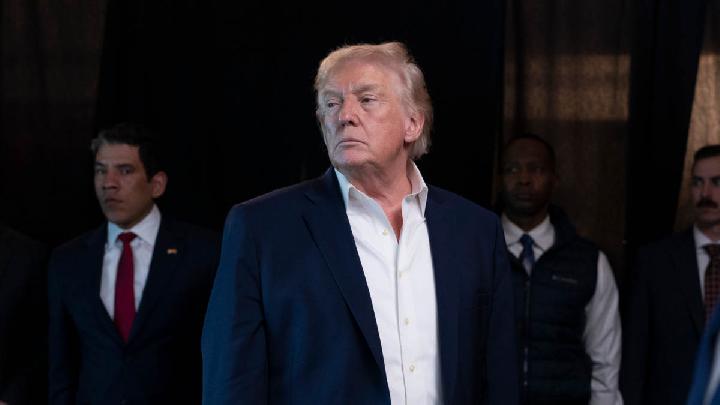
However, Mojtaba is seen as a continuation of his father's legacy and hardline rule. US President Donald Trump previously said appointing Khamenei's son would be "unacceptable," adding Iran's new leader was bound not to "last long" should the appointment not be coordinated with Washington.
"They are wasting their time. Khamenei's son is a lightweight," US outlet Axios quoted Trump as saying.
Israel's defense minister last week said that whoever is chosen as Ali Khamenei's successor would be a "target for elimination."
A hardline, controversial figure
While the 56-year-old Shiite cleric has largely kept a low profile and has never held public office, he is known to have considerable clout within Iran's complex power structure, particularly the IRGC.
Government officials became aware of Mojtaba's growing influence in politics in the mid-1990s. He was seen surrounded by IRGC fighters and commanders who had returned from the Iran-Iraq war (1980–1988).
But Mojtaba Khamenei came to the limelight during the 2005 presidential elections, which experts say he engineered. Iran's new supreme leader allegedly helped a relatively unknown figure from the IRGC, Mahmoud Ahmadinejad, win the vote.
The 2005 election left former president Akbar Hashemi Rafsanjani politically wounded, although he chose to remain silent. But Mehdi Karroubi, another presidential candidate in the election, wrote an open letter accusing Mojtaba of interfering in the election and facilitating Ahmadinejad's rise to power.
Four years later, Mojtaba faced the same accusation again. This time, Ahmadinejad's reelection triggered mass protests across Iran. Some protesters, who opposed the idea of Mojtaba succeeding his father as supreme leader, even chanted "death to Mojtaba" during the demonstrations.
During those turbulent months, numerous reports emerged about Mojtaba's increasing role in suppressing the so-called "green movement."
Financial assets
There have also been reports about Mojtaba's alleged financial corruption. According to government insiders, at least 60% of Iran's economy is operated through holding companies and institutions under Ali Khamenei's control — ranging from the Mostazafan Foundation to the Imam Khomeini Relief Committee and the Khatam al-Anbiya Construction Headquarters, to Astan Quds Razavi. Mojtaba, allegedly, oversaw the finances.
According to a 2026 Bloomberg investigation, Mojtaba's holdings include high-value real estate in London and Dubai, as well as interests linked to shipping, banking, and hospitality assets in Europe. According to the investigation, the assets were mostly not held in his name but structured through intermediaries and layered corporate entities across multiple jurisdictions.
Early life and development
State media portray Mojtaba as a man who lives a simple life. After completing his secondary education at Alavi School, Mojtaba Khamenei entered the Qom seminary, where he attended the lectures of influential clerics.
During his childhood, his father, Ali Khamenei, emerged as a prominent figure in the fight against the monarchy of Shah Mohammad Reza Pahlavi. He spent seven years in Sardasht and Mahabad cities in Iran's northwest and received his early education. He joined the IRGC in 1987 after finishing high school.
In 1999, Mojtaba pursued Islamic studies in Qom city to become a cleric.
Sources close to the IRGC and Iran's security institutions have published reports and recollections about Mojtaba's participation in the Iran-Iraq war of the 1980s.
According to these accounts, Mojtaba was about 17 when he went to the war front and joined a battalion. Several members of this battalion later became some of the most important intelligence and security figures in the Islamic Republic and often gathered around Mojtaba.
Not many people in Iran, including his father Ali Khamenei, thought Mojtaba would someday become the country's supreme leader.
Read: Iran Conflict: Ali Khamenei's Son Mojtaba Named New Supreme Leader
Click here to get the latest news updates from Tempo on Google New