TEMPO.CO, Jakarta - There are many ways to welcome the New Year; gather with families and friends for a joyful exit of the year, or reflect on the journey taken in the past year. Either way, New Year's Eve is not lacking in traditions.
Some New Year traditions have been around for hundreds, even thousands of years. Some symbolize prosperity and luck. For example, eating 12 grapes in Spain, believed to bring luck, or decorating the outside of the door in Greece is a symbol of fertility.
Here are some interesting New Year traditions around the world:
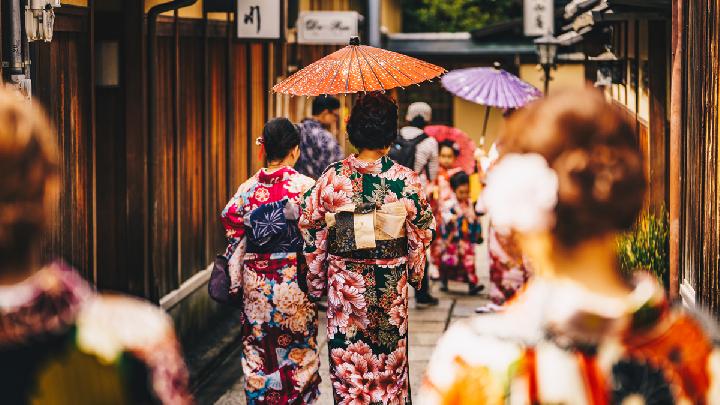
1. Swapping the old with the new in Japan
In Japan, people exchange omamori, talismans that are believed to bring good things for the year, at their local temples. People usually wait until December 31 to take their old omamori to be burned or exchanged for new ones. They can also choose specific talismans based on personal goals for the coming year, whether it's love, career, money, or others.
2. Wearing round-shaped clothes and eating moon-shaped foods in the Philippines
In Filipino culture, it is believed that wearing clothes with round shapes, such as polka dots or mandalas, can help ensure prosperity and luck in the coming year. Additionally, consuming round fruits, from oranges to pomelos, is also considered a New Year tradition that brings luck throughout the country.
3. Eating 12 grapes in Spain
People in Spain have a tradition of eating one grape at each of the 12 strokes of midnight, believed to bring luck throughout the year. Failing to do so is believed to bring a year of bad luck, as reported by Travel and Leisure Asia.
4. Mistletoe tradition in Ireland
In Ireland, those who place mistletoe, a semi-parasitic plant also synonymous with Christmas decoration, under their pillow on December 31 will dream about their future partners.
5. Entering homes with gifts in Scotland
In an effort to ensure luck in the coming year, Scots practice "first-footing," a tradition where the first person (preferably a dark-haired man) to enter a home on New Year's Day must bring a small gift for luck.
6. Walking with an empty suitcase in Mexico
In Mexico, those who love to travel and hope for more travel in the coming year walk around the block with an empty suitcase. Or place it in the middle of a room and walk around it to bring about many enjoyable trips in the next year.
7. Potato predictions in Colombia
Colombians who want to predict their financial abilities in the coming year place a peeled potato, a non-peeled potato, and a half-peeled potato under a family member's bed. They have to take one potato without looking. But hope for an unpeeled potato, as they are said to bring good fortune for the upcoming year. While a peeled potato is believed to bring financial misfortune, half-peeled just means a mix of both.
8. Eat to your heart's content in Estonia
One of Estonia's favorite New Year traditions among food lovers is to eat several times on New Year's Eve. People can eat a number of foods considered to be lucky and leave some on their plate for their ancestors. Usually, between 7, 9, or 12 times of eating on that day, which is considered a lucky number in the country.
9. Finding a peeled almond in the pudding in Scandinavia
In Sweden, Norway, Finland, and Denmark, a special rice pudding is prepared with a peeled almond inside. Anyone who gets the peeled almond in their bowl is said to have good luck in the coming year.
10. Burning symbols of evil in Ecuador
In Ecuador, statues of politicians and other figures are filled with sawdust and burned at midnight in an attempt to end the negative events of the past year. People also try to jump over a fire 12 times for luck.
11. Eating carp in Germany
Cooking and eating carp is a German tradition when welcoming the New Year. It is also believed to bring luck and wealth if you keep fish scales in your wallet/purse.
12. Smashing plates in Denmark
Although breaking plates at any other time of year is considered bad luck, in Denmark, such an act in front of the doors of friends and family is believed to bring luck in the New Year. It is believed that the more porcelain and glass fragments in front of the door on New Year's morning, the luckier.
Moreover, Danes also jump from chairs and sofas at midnight, symbolizing a figurative leap into the New Year. This brings luck, as long as you don't fall, as reported by Good Housekeeping.
13. Smashing pomegranates in Greece
Greeks consider pomegranates as a sign of prosperity, luck, and fertility, and hang them on their doors as a New Year's preparation. Just before midnight, all the lights in the house are turned off, and everyone goes outside, so that a chosen person can enter, with the right foot first, which is believed to bring luck in the coming year.
Others will then smash the pomegranates to check how much luck the household will have. Another tradition is to hang onions near their front door to ward off evil and welcome luck into their home.
14. Jumping over seven waves in Brazil
In Brazil, on New Year's Eve, people follow the religious tradition of Umbanda, entering the waves dressed in white and jumping over seven waves, one for each heavenly spirit. It is also believed that each wave jumped will grant a wish.
Read: Most Iconic New Year's Eve Fireworks Around the World
Click here to get the latest news updates from Tempo on Google News