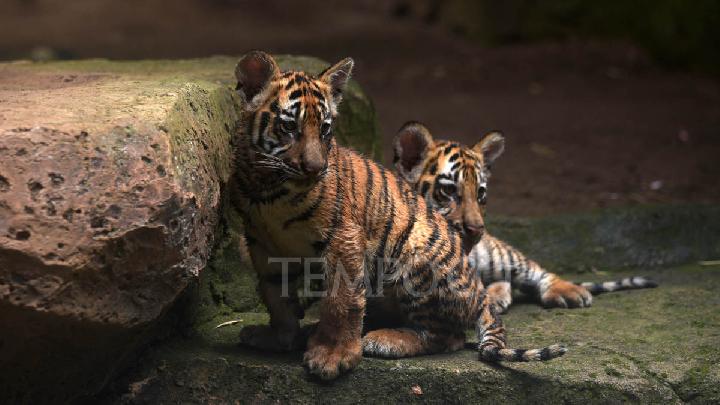
TEMPO.CO, Jakarta - Two eight-month-old Bengal tiger cubs died consecutively at Bandung Zoo, Indonesia, on March 24 and 26, 2026. The Bandung City Government and the West Java Natural Resources Conservation Center, citing the veterinary team, stated that the cause of their death was feline panleukopenia virus (FPV).
Regarding the virus, Pranyata Tangguh Waskita, the Director of the Veterinary Hospital at Padjadjaran University, explained that FPV has a morbidity rate of up to 100% and a mortality rate of 80-90%. This DNA virus from the Parvoviridae genus Protoparvovirus family is a single-stranded non-enveloped virus that is stable and resistant to environmental temperatures for several months.
"This panleukopenia virus particularly likes cells that are rapidly dividing, such as those in the digestive tract of young animals," said Pranyata to Tempo on Friday, March 27, 2026.
Pranyata, a lecturer in the Veterinary Medicine program at the Faculty of Medicine, Unpad, explained that the most susceptible group to FPV infection is the felidae family, including purebred and domestic cats, tigers such as Bengal and Siberian tigers, lions, leopards, cheetahs, and jaguars.
For the feline family, the most vulnerable to FPV infection are young or juvenile animals. "This is because of their incomplete immune system and the decline in maternal antibodies acquired at birth," Pranyata said.
The virus can be transmitted through direct contact, such as from the bodily fluids of infected cats, with the primary sources being feces or body waste, vomit, urine, saliva, and nasal secretions. Transmission can also occur indirectly through contaminated objects like food dishes, cages, shoes, or human clothing that has come into contact with the sick animal's environment.
In addition, transmission can occur through mechanical vectors such as fleas or ticks. "Up until now, this panleukopenia virus does not cause transmission to humans," Pranyata added.
Why It Can Be Fatal
The Chairman of the Indonesian Veterinary Association, West Java Branch 1, also mentioned that panleukopenia virus often causes death by damaging the primary defense system of the affected animal's body. This virus attacks the bone marrow where white blood cells (leukocytes) are produced. "As a result, the number of white blood cells drastically decreases from the normal amount, hence the term panleukopenia," said Pranyata.
The virus's assault can be observed from two highly dangerous clinical signs in animals. First, extreme dehydration due to the significant loss of body fluids through vomiting and bloody diarrhea. Second, cellular starvation where the ingested nutrients cannot be absorbed at all, leading to rapid depletion of the animal's energy.
Clinical indications or symptoms of panleukopenia disease include changes in the digestive tract such as repeated yellow vomiting, extremely foul-smelling and watery feces, and the total loss of appetite. From their behavior, the animals appear severely depressed, their heads become thin, their fur becomes dull, signs of dehydration, unresponsiveness, and the animals often hide in dark places.
Body temperature can also drastically increase early in the infection, ranging between 40-41 degrees Celsius, but it can drop below normal (hypothermia) as the animal approaches death. "Animals that survive may exhibit incoordination, tremors, and staggering," she said.
Pranyata stated that the critical period of this disease is around 5-7 days from the initial appearance of these symptoms. If the animal can survive beyond seven days, it can be saved as long as it is provided with intensive care by a veterinarian through 24-hour intensive inpatient treatment with fluid infusions and fluid therapy at an animal clinic. Additionally, the animal is given antibiotics to eliminate secondary infections that often accompany the disease.
"It usually quickly leads to death, especially when it affects vulnerable age groups, especially if the mother has never been vaccinated or infected with this panleukopenia virus," she said.
For cats, early detection of the panleukopenia virus can be done using a rapid test using a lateral assay system that is highly effective in determining the disease's infection. According to Pranyata, this system will help read the bond between the antigen and the marker present in the rapid test. The indicator is the appearance of lines on the testing area if the sample is positive for an FPV infection. The required samples are saliva or feces from the infected animal.
The presence of the virus can actually be countered by the animal's immune system, but it is not enough to protect against an FPV attack. Specific antibodies are required to combat this virus infection. This can be achieved by vaccinating vulnerable animal groups against panleukopenia, or those that have recovered from an active infection of this disease.
"As such, animals that have been vaccinated or have recovered from an infection already have memory cells to produce high antibodies to protect the body from future infections of this disease," said Pranyata.
For domestic cats, she stated that vaccination against panleukopenia infection is mandatory. This vaccine is a modified live vaccine that can be given for the first time to kittens at the age of 6-8 weeks or 2 months. Subsequent booster vaccinations are given one month after the first vaccination. Then annual vaccinations are necessary for reinforcement.
"The vaccination requirements are that the animal must be in good health based on the veterinarian's examination," said Pranyata. Up to now, this vaccination program has been very effective in providing protection to vulnerable animal groups.
According to Pranyata, the FPV can easily attack other similar animal groups. Prevention, apart from vaccination, also includes environmental control by disinfecting all equipment that has ever been used on sick animals. Infected animals must also be completely isolated and kept far away from healthy animals. Animal caregivers are required to wear changing clothes, gloves, and special footwear when entering the isolation area and not to use the same clothes to touch healthy animals.
"It is better to care for healthy animals first before tending to sick animals, to prevent the transmission and spread of this disease," she said.
In the case of the death of the Bengal tiger cubs, another factor that could exacerbate their death is the emergence of secondary infections that accompany panleukopenia. These infections are usually caused by bacteria due to decreased immunity and severe dehydration.
According to Pranyata, some efforts that can be made to determine the cause of the tiger's death include performing a necropsy or dissecting the carcass to determine the post-mortem pathological changes that occurred after the tiger's death. "Especially in the intestines, glands, and bone marrow," she said.
Then performing a rapid test with fecal samples from the deceased tiger, as well as conducting histopathological examinations to observe intranuclear inclusion bodies as a sign of the virus being inside the cell nucleus and severe damage to the intestinal crypt cells. Another examination is PCR to detect the genetic material (DNA) of the Panleukopenia virus specifically.
Read: Two Bengal Tiger Cubs Died at Bandung Zoo
Click here to get the latest news updates from Tempo on Google News