TEMPO.CO, Jakarta - Bobibos, labeled by its creator as "Red and White Vegetable Fuel" (BBN), is ready for mass production. However, the industrial-scale manufacturing of this alternative fuel made from straw waste is not taking place in Jonggol, Bogor, which is the producer's home base, but in the neighboring nation of Timor Leste.
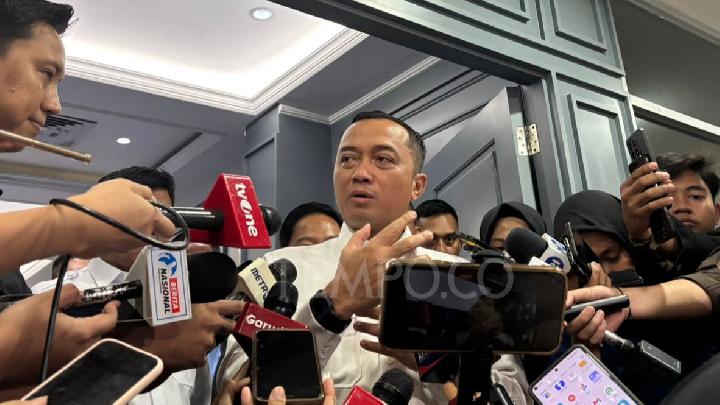
"Bobibos is now 75 percent ready for mass production in Timor-Leste," said Iklas Thamrin, founder of PT Inti Sinergi Formula and the creator of Bobibos (an acronym for 'Original Indonesian Fuel, Boss'), when contacted on Monday night, March 30, 2026.
Iklas claims that since its public introduction, Bobibos has attracted a lot of interest from various countries, including Malaysia, Vietnam, and even Norway. While he had hoped for domestic mass production, a lack of local progress led him to pursue foreign interest. Ultimately, in December 2025, Timor-Leste was selected as the first country to produce the fuel.
"Initially, we were hesitant and did not want to accept cooperation with any country," Iklas admitted. He revealed two primary reasons for finally moving forward: first, Timor Leste’s aggressive pursuit of the technology, and second, the historical tie of the country having been part of Indonesia before the 2000s.
According to Iklas, the Bobibos production trucks are currently en route to Timor Leste. Having departed from Indonesia on Sunday, March 29, 2026, the convoy is estimated to arrive around April 10, 2026.
Regarding the partnership, Iklas explained that PT Inti Sinergi Formula entered into a Cooperation Agreement (PKS) with the Timor Leste state-owned firm, Timor Agronova SA. This agreement led to the establishment of Timor Agro Bobibos Energy SA (TB) to produce the fuel locally.
"We target the end of April for a launch by the President of Timor-Leste," Iklas said, noting that initial production is set at 50,000 liters per day, or 1.5 million liters per month. "Regulations that are difficult to secure here (Indonesia), alhamdulillah, are actually being assisted and simplified there (Timor Leste)."
He believes that if mass production in Timor Leste successfully benefits the local renewable energy sector, other nations like Vietnam, Norway, and Malaysia will move to finalize their own agreements with his company. "Currently, we are focusing on Timor Leste first, as it is almost ready there," he stated.
The next phase involves developing an 11,000-hectare site, utilizing the land to grow rice, sugar palms, or palm oil to serve as raw materials. "Because the raw material for Bobibos is not limited to straw; the technological formula converts bioethanol into synthetic hydrocarbons. That is how we produce the BBN," Iklas explained.
Read: Indonesia Pushes for 20% Ethanol Blend in Fuel
Click here to get the latest news updates from Tempo on Google News