February 25, 2026 | 03:32 pm

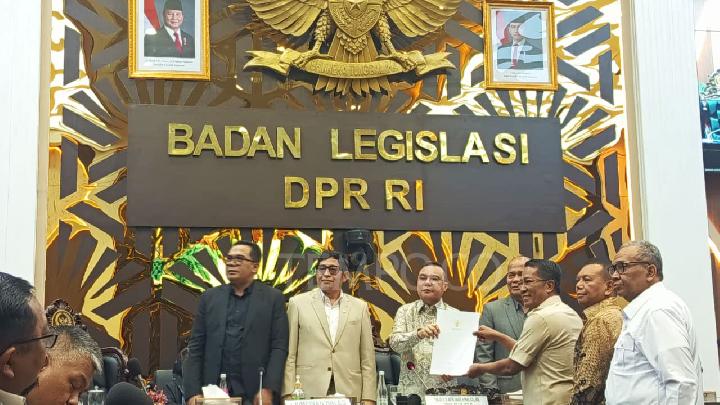
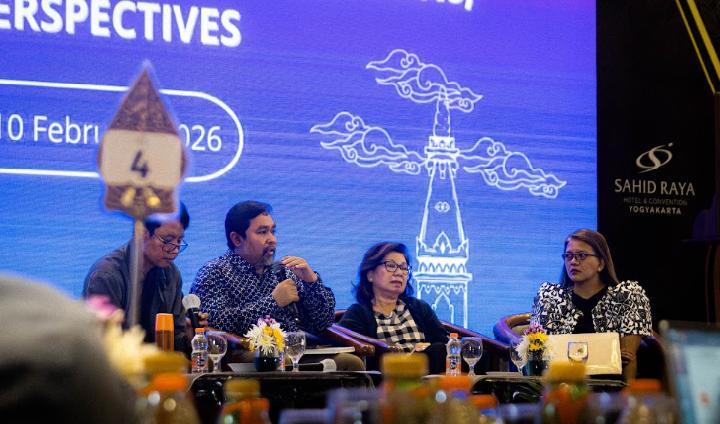
TEMPO.CO, Jakarta - Denny Indrayana, a Constitutional Law Professor at Universitas Gadjah Mada (UGM), has urged the Indonesian House of Representatives (DPR) to reject the reciprocal trade agreement with the US, deeming it lopsided and detrimental for Indonesia.
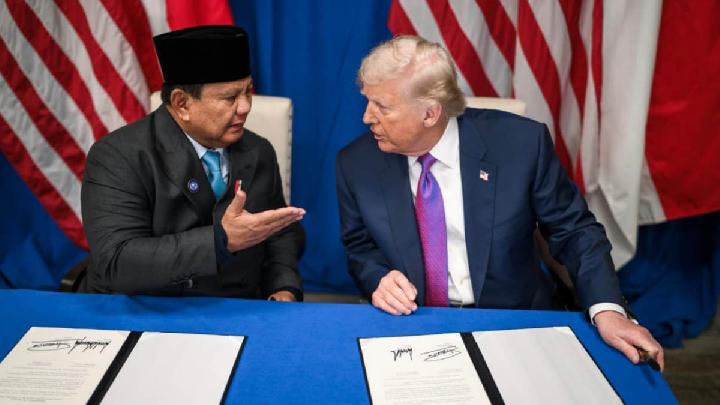
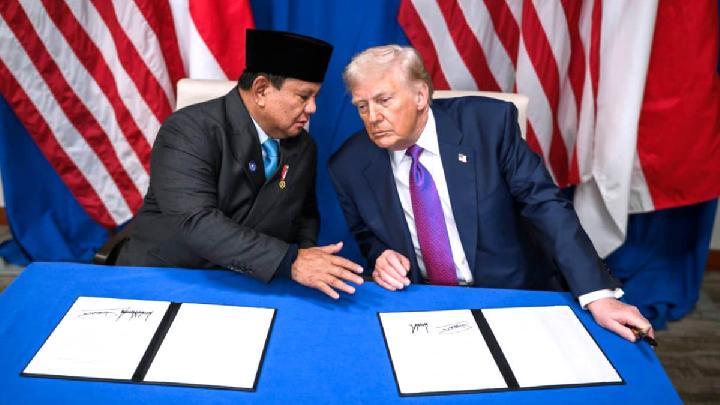
The trade agreement inked by President Prabowo and his American counterpart Donald Trump last week is unjust, he said. Indonesia is obliged to fulfill 214 obligatory clauses, while the United States only has 9. Denny argued that the gap in obligations indicates Indonesia's subjugation to the United States.
"The parliament must reject the agreement, which essentially amounts to American trade colonization of Indonesia," Denny stated in a video message received by Tempo on Wednesday, February 25, 2026.
This is one of the three legal options suggested by Denny to deal with the pact. Despite having been signed, Denny said it's not too late to back out since the agreement has not been taking effect and is not binding for both countries.
Indonesia's Constitution stipulates that the DPR must approve international agreements undertaken by the government. According to Denny, Article 11 of the 1945 Constitution states that the president, in making other international agreements that have broad and fundamental consequences for the people's lives, related to the state's financial burden and/or require the formation or amendment of laws, must obtain the parliament's approval.
The trade agreement obliges Indonesia to purchase energy, aircraft, and agricultural commodities worth US$33 billion or around Rp560 trillion. Denny believes that this figure poses a clear risk to the state's finances and consequently requires parliamentary approval.
Furthermore, Constitutional Court Decision No. 13 of 2018 annulled the provision that restricted the types of international agreements requiring parliamentary approval.
"The necessity for parliamentary ratification is also emphasized in written explanations from the Coordinating Ministry for Economic Affairs," he said.
Referring to Article 7.5 of the trade agreement, which stipulates that it will take effect within 90 days, Denny pointed out that the agreement is not yet in force and therefore is not binding. "Thus, the parliament, on behalf of the Indonesian people, can still reject it," Denny stated.
If the parliament decided to approve the agreement and enact it into law, Denny said, the second legal ption is to challenge it at the Constitutional Court.
"The primary test is that US trade colonization contradicts the principle of the people's sovereignty guaranteed by Article 1 paragraph 2 of the Constitution," he stated.
Additionally, the trade agreement violates Article 33 paragraphs 2 and 3 of the Constitution, concerning state control over important means of production, including land and water, for the prosperity of the people—not being handed over to the United States.
Third, if the Constitutional Court is compromised and decides to reject the lawsuit, there must be a strong demand for the government to terminate or at least renegotiate the agreement.
Especially as the US Supreme Court decided that Trump's sweeping tariffs were unlawful on February 20, a day after the agreement was signed with Indonesia.
"With the decision of the US Supreme Court, Indonesia is justified in requesting termination in accordance with Article 7.4, which states that the agreement ceases with written notice from the government, or at the very least, Indonesia can carry out amendments and renegotiations as regulated in Article 7.2 of the agreement," Denny said.
Read: Celios Files Objection Against Indonesia-U.S. Trade Pact Ratification
Click here to get the latest news updates from Tempo on Google News
EU Freezes US Trade Deal Over Tariffs Uncertainty
20 jam lalu

European Union officials are asking the US for clarity on Donald Trump's new 15% tariff before they can move ahead with the deal.
Indonesia's BPJPH Assures Public of Strict US Halal Standards
22 jam lalu

BPJPH assured the public that the US has a strict halal system and that consumers need not worry about halal-labeled imports.
BPJPH Ensures US Products in Indonesia to Carry Dual Halal Labels
23 jam lalu

Head of BPJPH Ahmad Haikal Hasan urged the public not to doubt American products entering Indonesia following the trade tariff agreement.
Celios Files Objection Against Indonesia-U.S. Trade Pact Ratification
1 hari lalu

CELIOS opposes the reciprocal trade agreement between Indonesia and the United States, citing legal concerns.
How Easing Halal Rules for US Products Affects Indonesian Businesses
1 hari lalu
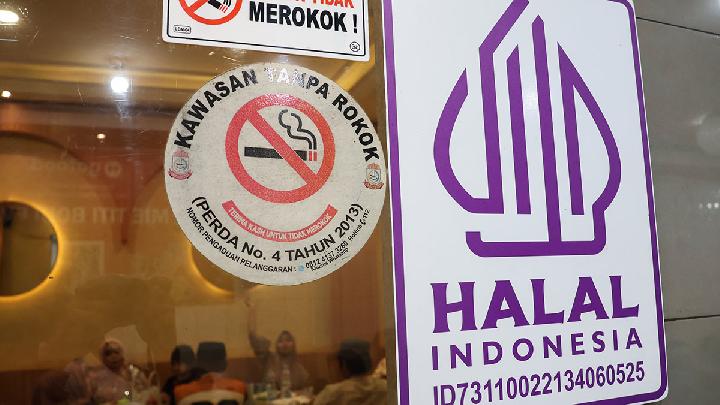
The agreement with the United States brings with it the concern about halal certification for American products entering the country.
Why the Indonesia-US Trade Pact Remains Vulnerable Despite 10% Tariff
1 hari lalu
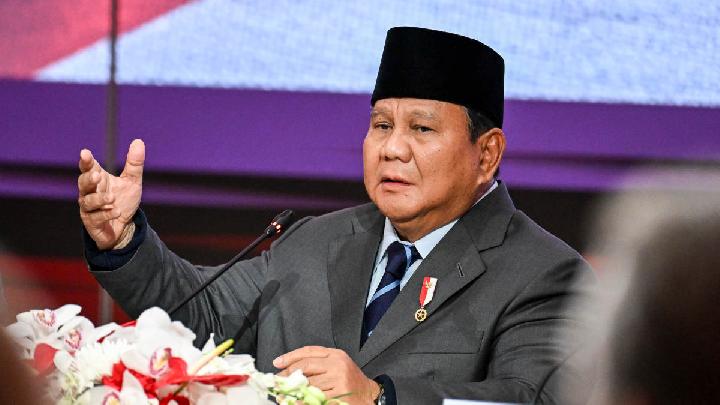
The 10 percent tariff scheme is nominally more profitable than the 19 percent or 32 percent tariff scenarios in the Indonesia-US trade agreement.
Trump's 10% Tariff Creates Global Trade Risks, Says Expert
1 hari lalu
Professor Syafruddin Karimi warns that President Trump's 10% import tariff creates global uncertainty.
Data Transfers to the US Remain Subject to Indonesian Rules
1 hari lalu
Cross-border data transfer is a key infrastructure for e-commerce, digital financial services, cloud, and other digital services.
Indonesia's BPOM Maintains Oversight of US Goods Following Trade Deal
2 hari lalu
Goods originating from the US must still undergo the administrative licensing process in Indonesia and are under the supervision of BPOM.
Key Facts About Prabowo's Washington Visit
2 hari lalu
During Indonesian President Prabowo's visit to the US capital, he attended several business forums and high-level conferences.