TEMPO.CO, Jakarta - Just over a week after his father, Ayatollah Ali Khamenei, was assassinated in the joint US-Israeli strikes that sparked a regional conflict, Iran has appointed Mojtaba Khamenei as its new supreme leader.
Born in Mashhad on September 8, 1969, Mojtaba Khamenei is the second son of Ali Khamenei, the former supreme leader of Iran, who was murdered on February 28 in an Israeli strike.
On March 8, a little over a week into the bloody conflict with the United States (US) and Israel, an 88-member Assembly of Experts declared him as the new supreme leader of the Islamic Republic.
Clerics named the 56-year-old as his father's successor on Sunday, March 8, 2026. He will now be tasked with guiding the Islamic Republic through its largest crisis in its 47-year history, as cited by Al Jazeera.
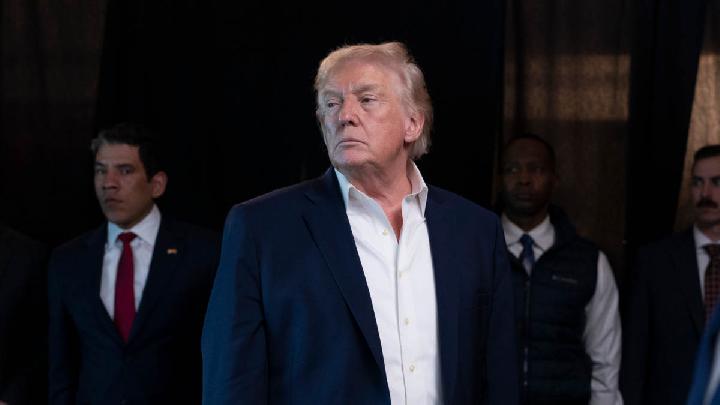
However, the US perceived Mojtaba as carrying on his father's heritage of strict governance. The appointment of Khamenei's son would be "unacceptable," according to US President Donald Trump, who also stated that Iran's future leader would not "last long" if the appointment was not coordinated with Washington.
"They are wasting their time. Khamenei's son is a lightweight," US outlet Axios quoted Trump as saying, as reported by DW.
Israel's defense minister last week said that whoever is chosen as Ali Khamenei's successor would be a "target for elimination."
Support for Iran's New Leader
Mojtaba is frequently characterized as both mysterious and one of the most powerful individuals in Iran's power structures. The strong Islamic Revolutionary Guard Corps (IRGC), which many consider to be in charge of the nation, is reported to have maintained close ties with him.
The Iranian people were asked by the Assembly of Experts to support the recently elected leader and "keep unity."
The armed forces, prominent figures, and Iran's formidable Islamic Revolutionary Guard Corps (IRGC) were ready to support the new leader.
The secretary of the Supreme National Security Council, Ali Larijani, who has been in charge of directing Iran's security strategy since the US and Israel began their full-scale onslaught, urged solidarity around the next supreme leader.
Following the new supreme leader is a "religious and national duty," according to Parliament Speaker Mohammad Bagher Ghalibaf, who applauded the decision, as quoted by Al Jazeera.
Mojtaba Khamenei has developed strong ties to the IRGC and has been a highly powerful member of the supreme leader's inner circle for decades despite never having ran for office or been put to the public vote.
The appointment of Khamenei suggests "continuity," according to Rami Khouri, a prominent public policy fellow at the American University of Beirut. However, it is unclear if the next supreme leader will advocate for peace talks.
Either way, he said, the appointment was “an act of defiance”. Iran is “telling the Americans and Israelis, ‘You wanted to get rid of our system? Well … this is a more radical person than his father who was assassinated,'” he said.
A Hardline, Controversial Figure
Mojtaba Khamenei is believed to have significant influence within Iran's intricate power system, especially the IRGC, despite his generally low profile and lack of public office.
In the mid-1990s, government officials were aware of Mojtaba's increasing political influence. IRGC officers who had returned from the Iran-Iraq War (1980–1988) encircled him.
However, Mojtaba gained prominence during the 2005 presidential elections, which experts claim he orchestrated. Mahmoud Ahmadinejad, a relatively obscure member of the IRGC, allegedly received assistance from Iran's new supreme leader to win the poll.
According to DW, reports and recollections on Mojtaba's involvement in the 1980s Iran-Iraq war have been released by sources close to the IRGC and Iran's security institutions.
These sources state that Mojtaba joined a battalion on the front lines of battle when he was around 17. Members of this unit frequently congregated around Mojtaba and went on to become some of the most significant intelligence and security figures in the Islamic Republic.
Few Iranians, including his father Ali Khamenei, believed that Mojtaba would eventually rise to the position of supreme leader of the nation.
AL JAZEERA | DW
Read: Trump Wants Regime Change in Iran, US Intelligence Says Impossible
Click here to get the latest news updates from Tempo on Google News