TEMPO.CO, Jakarta - Black smoke rises over the Persian Gulf as gas fields, power plants, civilian infrastructure, and military facilities across the region are under attack from Iran. Its government has said it will continue to respond in kind to US-Israeli attacks on military, civilian and energy-producing targets within its territory—even though US President Donald Trump has more than once declared that Iran has been militarily defeated.
As the war drags on into a fourth week, political pressure is building on Washington. Rising energy prices are fueling inflation and economic uncertainty worldwide. Nevertheless, the US and Israel are continuing their joint bombing campaign.
Does it leave any room for negotiations?
Marcus Schneider, head of the Friedrich Ebert Foundation's Beirut-based Regional Peace and Security Project in the Middle East, sees little chance for talks at present.
"I am very skeptical at the moment," he told DW.
Key interlocutors 'are no longer around'
With the targeted killing of key Iranian figures, important interlocutors have been removed. At the same time, potential successors are themselves under threat.
"These people are no longer around," Schneider noted. "And those stepping up to take their place are considered far less willing to compromise."
Iran's supreme leader Ali Khamenei was killed in the first hours of the war on February 28. His son Mojtaba Khamenei was named new supreme leader, but he has not been seen in public since the war began amid speculation he was severely injured in the strike.
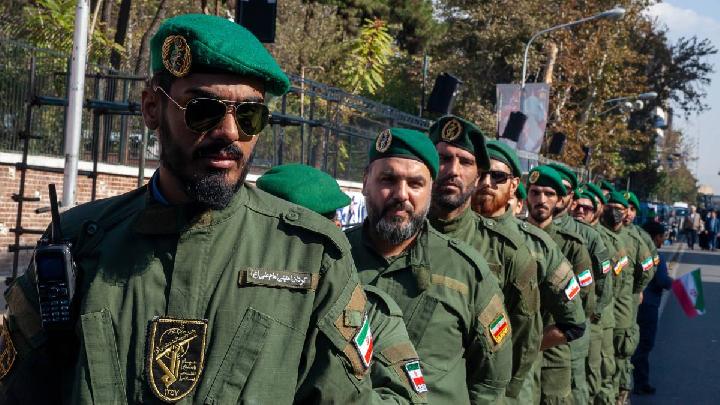
Other top officials have also been assassinated, including more recently security chief Ali Larijani, who was widely seen as one of the regime's key policymakers. On Friday, Iran's Revolutionary Guards reported that their spokesman had been killed in an airstrike.
Trust deficit
Even if Washington were willing, there would likely be little official interest in Iran to start talks, Stefan Lukas, director of the Berlin-based think tank Middle East Minds, told DW.
Iran's current leadership has learned from experience that attacks can occur even while negotiations are ongoing, he added. From Tehran's perspective, the damage caused by the US is too great for any level of trust to be established.
However, it cannot be ruled out that contact between the conflicting parties exists through background channels, for example via Iraq or Oman, Lukas said.
"However, there will be no significant changes at the diplomatic level for the time being," he said.
Iran's regime stays resilient, for now
From Iran's perspective, it is clear that anyone in a position to negotiate would be at risk.
"This strategy of decapitation strikes is now backfiring," Schneider said.
The assumption that removing key leaders could bring about a rapid regime change has proven to be a miscalculation, he said.
"For Iran's regime, merely surviving an armed conflict with the US constitutes victory," according to an analysis by the US-based think tank Middle East Institute.
This assessment is consistent with the impression that Tehran is currently focusing less on military breakthroughs and more on political and strategic outcomes.
Analyst Lukas pointed to the regime's structural resilience, sometimes called the "mosaic defense strategy" where semiautonomous units can operate in different areas without a centralized command structure.
"The regime has always been a black box," he said.
Despite the attacks, the regime's strategy of exerting economic pressure on the energy markets appears to be successful.
Iran's global economic escalation
The blockade of the Strait of Hormuz and attacks on energy infrastructure have had a direct impact on global markets.
"Why should Iran stop now?" Schneider said.
"Wars are decided not only militarily but also politically. Tehran hopes that its own capacity to endure hardship would prove to be greater than that of its adversaries."
While Iran may not be able to match the United States militarily, it can escalate the war economically, according to an assessment by Thomson Reuters. This shifts the balance of power, at least in part, to an arena where military superiority is less decisive.
Read: IMF: U.S. Military Action Against Iran Risks Driving Global Inflation
Click here to get the latest news updates from Tempo on Google News