TEMPO.CO, Jakarta - A number of social media accounts claim that the war between Iran and the United States (US) is merely a fabrication designed to profit from oil price fluctuations. The posts include a clip from a podcast featuring financial expert Dr. Gema Goeyardi on Tom MC Ifle’s YouTube channel, dated April 15, 2026.
The content has spread on Instagram [archive], Facebook, and TikTok. The accounts sharing the content accompany it with the narrative: “It turns out the war between the US and Iran is just a setup by the global elite to make money. The US and Iran aren’t just about armed conflict; there’s a clever scenario being played out to manipulate market movements.”

However, is it true that the war between the United States and Iran is merely a ploy by the global elite to profit from oil prices?
FACT CHECK
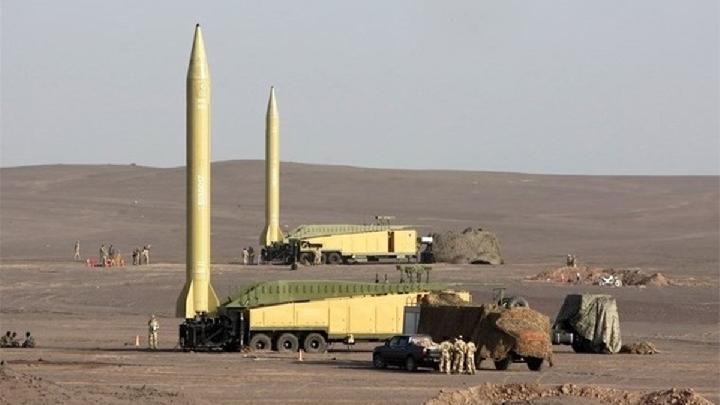
Tempo verified this claim by interviewing Middle East geopolitical researchers and other credible sources. While it is true that Iran’s war against the United States and Israel has driven up global crude oil prices, this conflict is not a fabrication.
US-Iran Relations Deteriorated After the 1979 Revolution
Abdullah, a lecturer in International Relations at Brawijaya University in Malang, stated that the current war between Iran and the United States could not possibly be the result of a scheme. Iran has been a longstanding enemy of the United States, with relations repeatedly heating up since the revolution four decades ago.
“Iran’s stance is quite clear: the retaliatory attacks are intended to make Israel and the United States stop attacking them,” he told Tempo by phone on Wednesday, April 22, 2026.
According to Abdullah, before the 1979 revolution overthrew Shah Mohammad Reza Pahlavi, Iran was a strategic ally of the United States in the Middle East. At that time, Washington interfered in various matters, ranging from the oil industry and control of the Strait of Hormuz to political interests.
Following the 1979 revolution that established the Islamic Republic of Iran under Ayatollah Ruhollah Khomeini, Tehran chose an independent path and severed American interference. Since then, the two countries have had no diplomatic relations or cooperation. Instead, tensions have continued to rise. The U.S. imposed economic sanctions and carried out military operations, culminating in an outbreak of hostilities on February 28, 2026.
Hostilities between the two nations have intensified because Iran is preventing the expansion of Israeli-occupied territory (Greater Israel). “So the U.S. feels threatened by Iran, particularly regarding Israel,” Abdullah added.
Al Jazeera and the Council on Foreign Relations note a crucial period of tension between the two countries:
- 1980–1988: The United States (US) supported Iraq’s invasion of Iran. This eight-year war resulted in thousands of deaths on both sides.
- 1995: The US imposed additional sanctions, such as prohibiting US companies from doing business with Iran and imposing sanctions on foreign entities that invested in or sold weapons to Iran.
- 2002: Following the 9/11 attacks in the US, President George W. Bush labeled Iran as part of the “Axis of Evil” alongside Iraq and North Korea.
- 2018: Trump withdrew from the nuclear deal reached during President Barack Obama’s administration and reimposed sanctions on Iran.
- 2020: The US killed Iranian General Qassem Soleimani, head of the elite Quds Force of the Islamic Revolutionary Guard Corps (IRGC), in Baghdad in a drone strike.
- 2025: The US bombed three major nuclear facilities in Iran.
Americans Hit Hard by Surge in Oil Prices
Claims that Iran and the United States orchestrated a war for oil profits do not reflect reality. Americans are actually suffering due to the surge in global oil prices following the war on February 28, 2026.
A March 2026 Reuters and Ipsos poll of 1,545 adults showed that about 55 percent of respondents felt their household finances were affected by rising gasoline prices. About 21 percent of them said they were severely impacted.
Business Insider reported that the Consumer Sentiment Index hit an all-time low in April 2026. This index measures American consumers’ perceptions of current and future economic conditions.
The plunge in the index is directly correlated with the skyrocketing fuel prices. As many as 69 percent of workers in the US rely on private vehicles, while only 4 percent use public transportation. Consequently, gasoline prices significantly impact their daily expenses.
Data from the Energy Information Administration (EIA) shows that gasoline prices in the U.S. surged 21 percent, reaching $4.12 per gallon on April 6.
CONCLUSION
Tempo’s fact check concludes that the claim that Iran is collaborating behind the scenes with the United States to instigate a war in order to profit from oil sales is misleading.
TEMPO FACT-CHECK TEAM
**Do you have information or claims that you want to have fact-checked? Contact our ChatBot. You can also send criticism, objections, or feedback for this Fact-Checking article via email to [email protected].