
November 11, 2025 | 11:09 am
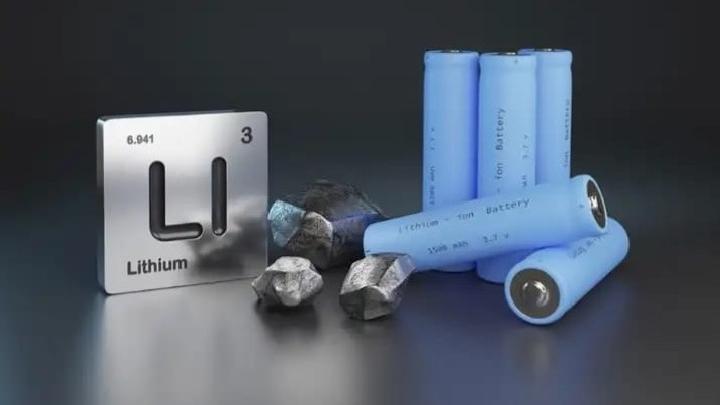
TEMPO.CO, Jakarta - Indonesia’s National Research and Innovation Agency (BRIN) has developed new active materials for next-generation batteries, marking a major step toward advancing the country’s role in global clean energy innovation.
The research was carried out by BRIN’s Energy Material Research Center under the Nanotechnology and Material Research Organization.
The project focuses on developing high-nickel cathodes (Ni-rich NMC) for greater energy capacity, stable lithium titanate (LTO) anodes, and LiPO solid electrolytes synthesized using the Spark Plasma Sintering (SPS) method. The study has resulted in several national patents and publications in leading scientific journals.
“This innovation has the potential to produce batteries that are safer, more efficient, and environmentally friendly,” said BRIN Chief Researcher Evvy Kartini in a written statement on Monday, November 10, 2025.
To support testing and validation, BRIN and its industry partners have built battery performance and safety testing facilities that include cell and pack testing, vibration, mechanical shock, and extreme temperature resistance.
Evvy said these facilities serve as key reference points for national battery standardization and compliance with international safety regulations, including UNR 100 and UNR 136 for electric vehicles.
According to her, adopting UNR 136 is crucial to ensure the safety of rechargeable energy storage systems (REESS) in electric vehicles.
he regulation covers tests for vibration, mechanical and thermal shock, overcharging, over-discharging, and fire resistance. Batteries must show no leakage, explosion, or fire after testing.
Indonesia’s National Standardization Agency (BSN) has adopted UNR 136 as SNI 8872:2020, which serves as the national guideline for manufacturers and testing institutions to assess EV battery performance and safety.
“The implementation of UNR 136 and SNI 8872 is a strategic step for Indonesian battery products to compete in the global market while ensuring the safety of electric vehicle users,” Evvy said.
She added that lithium-ion (Li-ion) batteries are the backbone of the global transition to clean energy, thanks to their high energy density, fast charging efficiency, and long lifespan, making them the preferred choice for electric vehicles and energy storage systems.
“Lithium-ion batteries are not merely technological components but strategic enablers of transportation decarbonization and national energy independence,” Evvy said.
She explained that Li-ion technology consists of four main components: the cathode, anode, electrolyte, and separator.
The cathode serves as a source of lithium ions and is typically made from metal oxides such as NMC (Nickel Manganese Cobalt Oxide) or LFP (Lithium Iron Phosphate), while the anode is generally composed of graphite. Liquid electrolytes carry lithium ions between electrodes.
“To further enhance safety, our latest research also focuses on developing LiPO-based solid-state electrolytes, which offer greater thermal stability and are less prone to combustion,” Evvy added.
Editor’s Choice: New BRIN Head Vows to Oversee Prabowo's Priority Programs on Food, Energy
Click here to get the latest news updates from Tempo on Google News
New BRIN Head Vows to Oversee Prabowo's Priority Programs on Food, Energy
13 jam lalu
BRIN will also conduct national consolidation in research and innovation.
Indonesia Set to Operate VinFast EV Factory in Subang by Year End
14 jam lalu
VinFast, an electric car manufacturer from Vietnam, is expanding its business network in Indonesia by building a factory in Subang, West Java.
What You Need to Know About Bringing Electronic Devices on Flights
15 jam lalu

Various international airports have implemented new rules requiring that electronic devices brought onto planes be powered on.
The Politics Behind the Push to Replace BRIN's Chief
18 jam lalu
BRIN's Steering Committee Chair Megawati Soekarnoputri faces pressure to propose replacing the agency chief. Is political interest at play?
Five Indonesian Scientists Awarded the 2025 Habibie Prize
22 jam lalu
BRIN continues to uphold the tradition of honoring scientists. In 2025, the Habibie Prize was awarded to five national scientists from five fields of study.
Indonesia Targets Full EV Battery Downstreaming Within Two Years
5 hari lalu

The government expects downstream development of electric vehicle (EV) batteries, particularly nickel-based ones, to be realized within two years.
Is Indonesia Really Sitting on a Rare Earth Minerals Goldmine?
7 hari lalu

Most rare earth metals in Indonesia are not primary minerals. Indonesia is approaching China and Russia for their processing technology.
Why It's Sensible for Indonesia to Manufacture EVs as National Car
12 hari lalu

Racer and automotive observer Fitra Eri Purwotomo reveals the reasons why electric cars make more sense as Indonesia's national car.
Cikande's Cesium-137 Decontamination: 63 Residents Relocated, Others Set to Follow
18 hari lalu

The decontamination process of radioactive Cesium-137 remaining in the industrial area is targeted to be completed by tomorrow.
3 Key Factors Behind Java's Sudden Shift from Scorching Heat to Humid Weather
19 hari lalu
BRIN explained that Java's weather transition is being driven by a combination of global and regional atmospheric factors occurring simultaneously.





































:strip_icc():format(jpeg)/kly-media-production/medias/5357081/original/011599400_1758518426-expressive-young-girl-posing.jpg)