April 10, 2026 | 08:46 pm
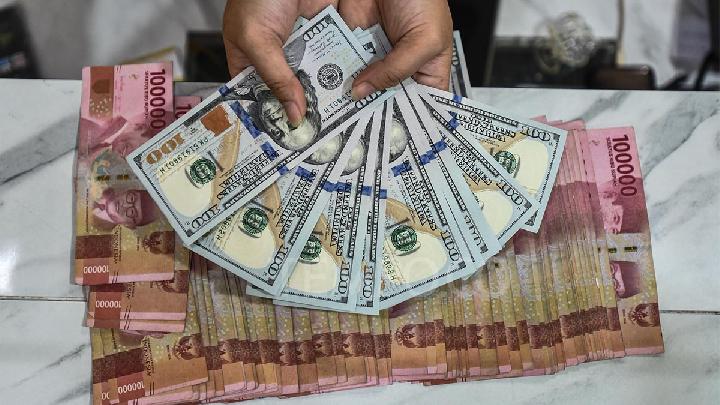
TEMPO.CO, Jakarta - The exchange rate of the rupiah has consistently closed at 17,000 per U.S. dollar throughout this week. Syafruddin Karimi, a Professor at Andalas University, stated that the weakening of the rupiah could lead to higher prices for imported goods and gradually drive up inflation.
By the end of trading this weekend, the rupiah had weakened to 17,104 per U.S. dollar, a decrease of 0.08 percent from the previous day. "If the rupiah remains in the range of 17,000 per U.S. dollar for a long time, the public will directly feel the pressure on the cost of living," said Syafruddin when contacted on Friday, April 10, 2026.
Syafruddin explained that the first impact would appear in the form of increased prices of imported food, food raw materials, medicine, medical supplies, electronics, animal feed, and household necessities. These needs are connected to the global supply chain.
The pressure will intensify as the world energy prices remain high. In the same market, the price of Brent oil is at US$96.48 per barrel and WTI at US$98.72 per barrel. The increase in energy costs usually quickly spreads to transportation and distribution costs, and then drives up the prices of goods in traditional and modern retail markets.
"Poor households and the middle class will bear the heaviest burden because their spending is concentrated on food, transportation, and routine needs," said Syafruddin.
If the rupiah consistently stays at 17,000 per U.S. dollar, the increase in goods prices in the community will not happen all at once but rather gradually and steadily. Although the inflation rate depends on the cost structure of each sector, market signals indicate that this pressure will not disappear quickly.
One indicator is the USD/IDR spot rate, currently at 17,085. Other indicators include the one-month forward rate at 17,100 and the three-month forward rate at 17,128. This structure, according to Syafruddin, indicates that market players still see the weak rupiah in the coming months.
The global situation is also difficult. In the United States, inflation, or the increase in commodity prices, is still high. As a result, the interest rate will not decrease in the near future. Therefore, the dollar has the potential to remain strong and continue putting pressure on the currencies of developing countries, including the rupiah.
Entrepreneurs are under pressure due to increasing production costs caused by expensive imported raw materials amid the rising dollar. Under these conditions, large producers may delay some price increases to maintain sales, particularly when household purchasing power is weak. "However, the ability to hold prices is very limited if imported raw materials, energy, and financing costs remain high," he said.
Factories are unlikely to pass on increased production costs to consumers immediately, but rather, they will gradually increase them. Initially, producers will absorb some of the costs, and then they will selectively raise prices when the exchange rate depreciation persists and old stocks start to run out. "The public will still feel inflation, especially in processed foods, medicine, transportation, and durable consumer goods," said Syafruddin.
Syafruddin's explanation is in line with the statement of the Chairperson of the Indonesian Employers' Association (Apindo) Shinta Kamdani. Despite the strengthening U.S. dollar, which increases production costs, producers with large profit margins can hold off on raising consumer prices.
However, most do not have thick margins and must adjust their product standards. Adjustments are made by either reducing the product's completeness or quality, or by reducing its size.
The aim is to cut down or rationalize production costs without raising market prices too high. "If all of the above options are not possible, then companies will inevitably have to raise market selling prices with the risk of reduced sales performance or changes in market absorption," he said in an interview with Tempo, quoted on Friday, April 10, 2026.
Read: Rupiah Hits 17,100: How the Plunge Strains Govt Debt Burden
Click here to get the latest news updates from Tempo on Google News
Indonesian Rupiah Slides to 17,104 Against US Dollar
5 jam lalu

The rupiah's exchange rate is predicted to fluctuate and weaken over the next week.
Rupiah Hits 17,100: How the Plunge Strains Govt Debt Burden
9 jam lalu

Economists warn that the rupiah's drop to 17,100 per US dollar will increase government debt interest and principal payments.
Weakening Rupiah Squeezes Businesses as It Hits 17,070
1 hari lalu
The government is urged to implement all necessary fiscal and monetary interventions to restore the stability of the rupiah exchange rate.
Rupiah Strengthens Following US-Iran Temporary Ceasefire
2 hari lalu

Indonesia's rupiah exchange rate strengthened 120 points, or 0.70 percent, to Rp16,985 per US dollar on Wednesday morning, due to US-Iran ceasefire.
Airlangga: Rupiah Weakening Not Unique, Other Currencies Also Falling
3 hari lalu

The rupiah dropped 70 points, or 0.41 percent, to 17,105 per US dollar from Monday's close of 16,980.
Rupiah Hits Record Low, Bank Indonesia Says Will 'Maintain Stability'
3 hari lalu

On Tuesday, April 7, 2026, the rupiah exchange rate closed at Rp17,105 per US dollar.
Rupiah Weakens to Rp17,105 Amid US-Iran Escalation Fears
3 hari lalu
An analyst said the rupiah weakened as investors turned cautious ahead of Trump's deadline for Iran to reopen the Strait of Hormuz.
Gold Price Expected to Reach Rp3 Million per Gram Next Week
5 hari lalu

The director of PT Traze Andalan Futures, Ibrahim Assuaibi, predicts that the gold price will rise to Rp3 million per gram in the next trading week.
Rupiah Strengthens as Markets Bet on Middle East De-Escalation
9 hari lalu
The rupiah rose 55 points, or 0.32 percent, to Rp16,986 per U.S. dollar, from the previous close of Rp17,041 per dollar.
Rupiah Weakens to 17,041 per US Dollar as Oil Prices Surge
10 hari lalu
The rupiah fell 39 points, or 0.23%, to Rp17,041 per US dollar on Tuesday, down from Rp17,002.