April 24, 2026 | 10:02 am

The suspect in the satellite corruption case does not want to be the only person prosecuted. He has named Ryamizard and Jokowi.
REAR Admiral (Ret.) Leonardi is trying to disprove the charge that he was the mastermind behind the Defense Ministry’s satellite corruption case. At the Jakarta Second High Military Court, he claimed that the chain of responsibility extended all the way up to the then Defense Minister, Ryamizard Ryacudu, and President Joko Widodo.
Leonardi is seeking to position himself as the executor, not the mastermind. This argument is common in corruption cases involving the bureaucracy and major state projects. When the project is underway, it is claimed that decisions are taken collectively, but when it runs into problems, the number of people responsible decreases and extends no higher than a certain level. Some suddenly claim ignorance, others insist they were only following orders, and there are also those who say it is merely an administrative matter.
Leonardi also highlighted technical reasons. The old satellite has reportedly left its orbital position, requiring the state to quickly seek a replacement. The procurement process, he explained, involved many people: from budget users and officials responsible for agreements to the committee responsible for accepting the completed project. He even admitted not knowing about documents from his colleagues. Again, this is nothing new: many are involved at the start of a project, but there are only a few once legal problems arise.
The Attorney General’s Office has a different version. Losses to the state are claimed to exceed Rp306 billion (US$18 million), based on an international arbitration ruling. Lenonardi, who signed the contract for the procurement of the satellite in 2016, refutes this, claiming that state funds have not been spent. But there are problems with this excuse. Losses to the state are not always in the form of disappearing cash. Unfavorable legal rulings, bad contracts, payment obligations and missed economic benefits are also tangible losses.
It is true that there was an element of urgency. The orbital slot at 123 degrees East longitude was contested. If Indonesia had acted too slowly, it could have been taken over by another party. Therefore, it is understandable that the president asked for swift action in the national interest. But speed is not a reason to abandon common sense or good governance.
In fact, it is emergencies that test the quality of decision-making. Is the state able to act quickly and carefully? Or, conversely, is panic used to justify buying an expensive solution that is not suitable? In too many cases, the word “emergency” is used to open the back door to decisions that should be closely scrutinized.
The satellite business is both strategic and costly. It demands technological, economic, and long-term calculations. If it is true that the satellite chosen is based on old and suboptimal technology, the problem is not simply one of corruption. It is also a matter of poor quality public policy. It is as if the state bought an obsolete vehicle for the needs of the future.
Therefore, the important questions are not limited to who benefited financially or who signed the document. More importantly: how could a decision of this scale be approved? Who assessed the suitability of the technology? Who examined the price and risks? Why did the oversight mechanism not work?
Leonardi’s request for all parties involved to be questioned can be considered as a strategy to spread the blame. This is a reasonable defense for a suspect. But behind this are factors that it is difficult to deny: strategic national decisions almost never come from one person alone. If the process is collective, the responsibility must not be selective.
The Defense Ministry’s satellite case should serve as a reflection of a long-standing problem in state governance: major decisions are often made hastily, shielded by the rhetoric of national interest, and followed by minimal accountability when they fail. As long as this pattern persists, scandals will continue to recur in the future—only the project names and the defendants will change.
The Chain of Command in Satellite Corruption
1 jam lalu

Defendants in the satellite corruption case say they hold documentary evidence of orders to secure the 123 degrees East Longitude orbital slot.
UK Media Report: Iran Used Chinese Satellite to Target US Bases
7 hari lalu
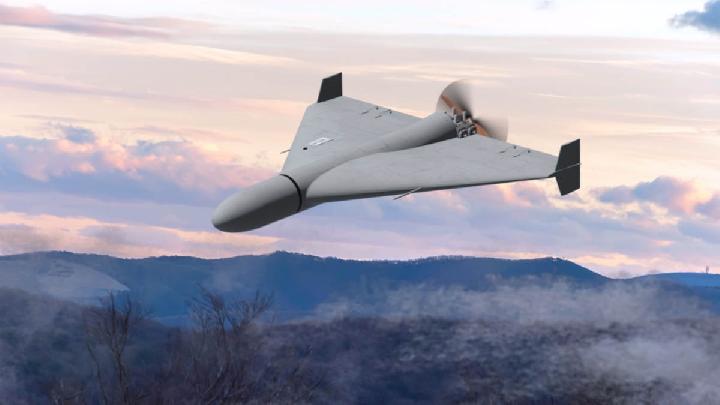
Iran is reported to be using a Chinese-made spy satellite to target the United States military bases in the Middle East.
US Firm Planet Labs Withholds Iran Conflict Satellite Images
18 hari lalu

Planet Labs, a satellite imaging company, has halted the distribution of satellite images of Iran and the Middle East during the ongoing war at the request of Trump.
Chinese Satellites Show Images of Increased US Presence in Middle East
54 hari lalu

The Chinese satellite company MizarVision continues to document the movements of US military aircraft in the region as potential attack on Iran looms.
Indonesia's Satellite N5 Reaches Geostationary Orbit Above Kalimantan
30 Januari 2026
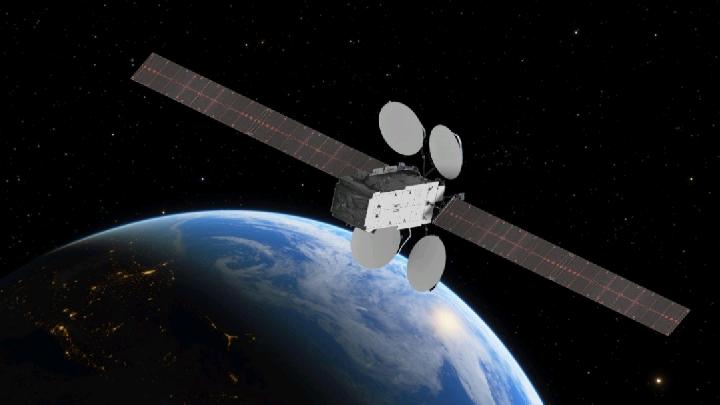
The Satellite Nusantara Lima (SNL), also known as Satelit N5, has reached the geostationary orbit directly above the island of Kalimantan on Thursday, January 29, 2026.
Jeff Bezos' Blue Origin to Build 5,400-Satellite Megaconstellation
26 Januari 2026

Blue Origin announces its plan to build TeraWave, which consists of 5,280 satellites in low Earth orbit (LEO) and 128 in medium Earth orbit (MEO).
China Applies to Launch Nearly 200,000 Satellites in Next Few Years
20 Januari 2026

China has submitted two filings for the registration of huge non-geostationary satellite networks to the International Telecommunication Union (ITU).
Satellite Images Show Israel Destroyed 1,500 Buildings in Gaza After Ceasefire
13 November 2025

The Israeli military has destroyed over 1,500 buildings in Gaza since the ceasefire agreement took effect last month
Today's Top 3 News: BMKG Reports Strong M4.9 Earthquake Hits Bengkulu, Indonesia
15 September 2025
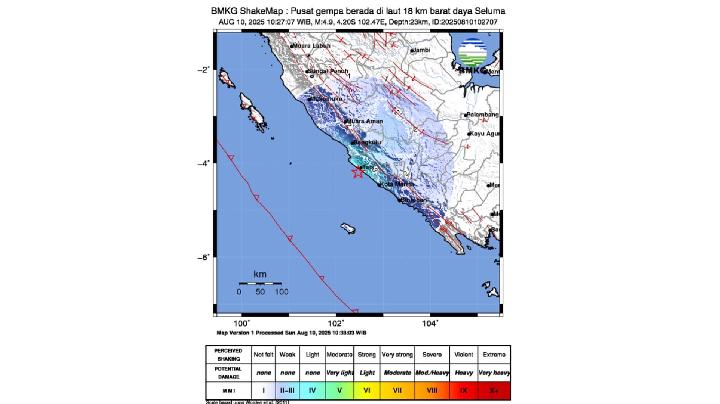
Here is the list of the top 3 news on Tempo English today.
Indonesia Launches New Satellite to Bring Internet to the East
15 September 2025

The Indonesian satellite was launched from Cape Canaveral, United States, using a SpaceX Falcon 9 rocket.