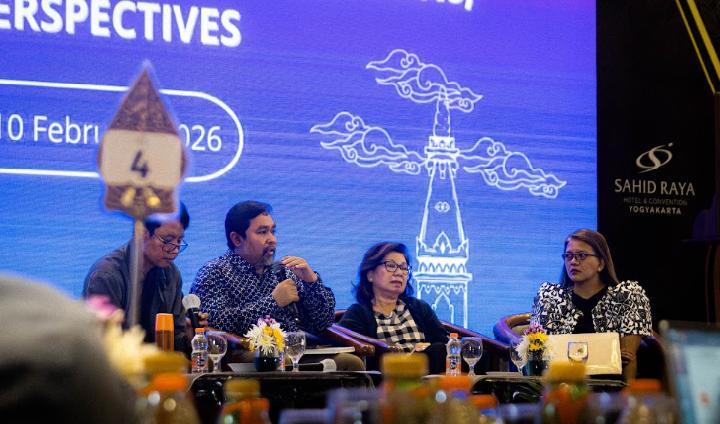
TEMPO.CO, Jakarta - The United Nations Industrial Development Organization (UNIDO) has officially launched its flagship Industrial Development Report 2026 (IDR26). Titled “The Future of Industrialization,” the report was introduced during the 21st Session of the UNIDO General Conference and the Global Industry Summit 2025 in Riyadh, Saudi Arabia.
The launch occurred during a high-level session on “Preparing for the Future of Industrialization.” This event brought together government ministers, development partners, private-sector leaders, and economists.
They discussed how the global industry must evolve to handle rapid economic, technological, and environmental changes. The session served as a platform for leaders to align on new industrial strategies.
The Industrial Development Report 2026 provides new, data-driven insights into global industrial performance and emerging technologies. Using scenario-based modeling, the report shows how industrial development is being reshaped by global megatrends. These include the green transition, AI-driven digitalization, changing labor markets, shifting geoeconomics, and evolving food systems.
"The current unsustainable growth trajectories can only be offset by industrial push policies," says Marco Kamiya, UNIDO Country Representative for Indonesia, Timor-Leste, and the Philippines.
He added that "future-ready industries could reduce global extreme poverty by hundreds of millions and increase manufacturing value added by around 60%. Industrial transformation pathways in the IDR 2026 indicate a 25% higher average GDP per capita and a 6% reduction in global emissions under coordinated policy action."
A clear message in the IDR26 is that joint efforts can deliver both economic and environmental gains. The report shows that expanding industrial ecosystems, alongside clean energy and sustainable supply chains, can lift millions out of poverty. These efforts also help close the global manufacturing gap. The report highlights significant opportunities for developing and least developed countries to transform their economies.
The report also identifies growth areas that will shape future industries. These include clean technology manufacturing, critical minerals, AI-enabled innovation, and the bioeconomy. These sectors offer new ways for countries to design industrial policies that promote resilience and long-term sustainability. By focusing on these areas, nations can build more inclusive economies.
The Asia-Pacific region is a primary focus of the report, with a dedicated section on Southeast Asia. This section highlights the need to close industrial gaps in innovation and research and development (R&D). Currently, these sectors in Southeast Asia remain well below global capabilities. The report suggests that catching up in these areas is vital for regional competitiveness.
IDR26 confirms that achieving a sustainable industrial future requires collective action. Industrialized and developing nations must work together with the international community. This cooperation ensures that the benefits of industrial transformation are shared broadly across all regions. The report calls for urgent policy changes to meet these global goals.
The launch of the IDR26 was a highlight of the General Conference. It was accompanied by the announcement of new bilateral and multilateral partnerships among UNIDO, Member States, and the private sector. These collaborations aim to accelerate industrial transformation worldwide, with a focus on supporting developing regions.
Read: Japan Raises Its UN Presence to Counter China's Influence
Click here to get the latest news updates from Tempo on Google News