TEMPO.CO, Jakarta - The release of the Indonesian National History Book by the Ministry of Culture has raised concerns among history teachers, who fear that the state-backed publication could standardize historical narratives and narrow space for critical thinking in classrooms.
Teachers argue that while the book is intended as a unifying reference, its status as an official national history risks positioning it as the only authoritative account of Indonesia’s past.
History teacher at SMAN 11 Bekasi, Prakoso Tio, said the government’s initiative marks a rare moment in Indonesia’s historiography.
According to him, this is only the second time the state has officially authored and distributed a national history book to schools, following the Indonesian National History published during the New Order era in 1976 under the coordination of Nugroho Notosusanto.
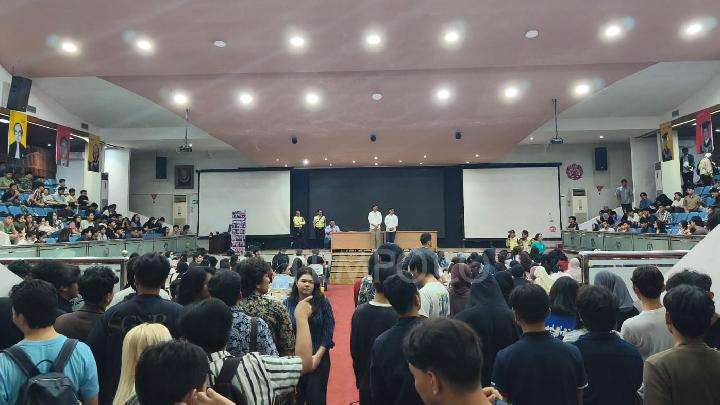
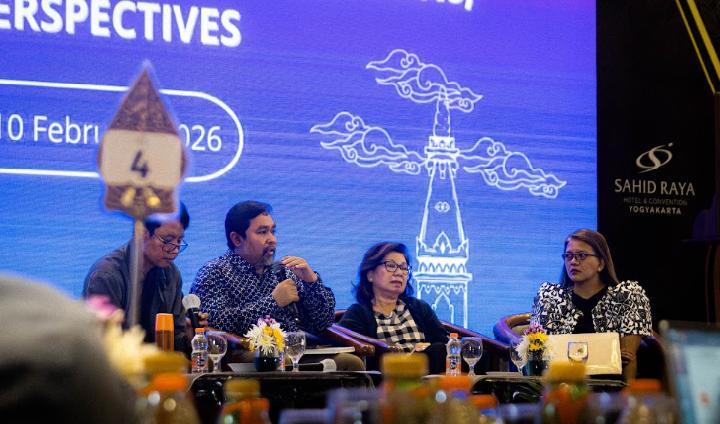
“This is a large-scale and ambitious project, something we have not seen for decades,” Prakoso said during a discussion on the Examination of the History Subject Curriculum and Its Relevance to the New Indonesian History Book on Friday, December 19, 2025.
He noted that unlike the Indonesian History in the Flow of History (IDAS) series published in the early 2000s, the new government-funded book is designed to serve as the primary learning reference.
Risk of Marginalizing Alternative Histories
Prakoso warned that labeling a single narrative as “official history” could sideline alternative perspectives. He said stories not included in the book may gradually be seen as irrelevant or inaccurate.
“When a narrative is defined as official, other histories risk being treated as unimportant or untrue,” he said.
He cited the example of the 1870 peasant rebellion in Bekasi, a local event he regularly teaches but which does not appear in the national history book.
“If it does not enter the official narrative, local history may eventually be considered non-existent,” he said.
Between Academic Goals and Political Interests
The national history book aims to present an Indonesia-centric narrative and move away from colonial bias. Prakoso acknowledged that this objective is academically legitimate, but cautioned that it is vulnerable to being drawn into identity politics.
“In national history, some stories are emphasized while others are removed. This is not purely an academic process, but also a matter of power,” he said.
Referring to historian Asvi Warman Adam, Prakoso noted that national history writing often becomes a battleground between historical scholarship and political interests. He also cited Jason Stanley’s book Erasing History, which discusses how states may seek legitimacy by controlling narratives of the past.
“A state that lacks confidence often begins to manage its history,” Prakoso said.
Teachers Caught in a Dilemma
For educators, the release of an official national history book creates a dilemma. Teachers may be positioned as transmitters of the state’s narrative, while simultaneously being expected to foster critical thinking among students.
“If teachers only repeat one version, that is not history education, but indoctrination,” Prakoso said.
He emphasized that teachers still have room to adopt a critical approach under the Learning Achievement (CP) framework outlined in the Chief of BSKAP’s Decision No. 46 of 2025. The framework stresses deep learning, historical thinking skills, source literacy, and inquiry-based research.
“CP provides pedagogical autonomy for teachers,” he said.
History as a Space for Inquiry
Prakoso argued that if the national history book is introduced in schools, it should be treated as one source among many, not as the sole truth. He suggested that teachers could use the book as a tool for discussion, examining what is included, what is excluded, and the reasons behind those choices.
He also stressed the importance of continuing to teach sensitive chapters of Indonesia’s past, including the events of 1965 and 1998. According to him, history education should not focus solely on heroic narratives, but also address national tragedies.
“The goal is not to instill hatred, but to develop critical thinking and empathy,” he said.
Prakoso concluded that while the state will always have interests in shaping narratives of the past, history teachers should not simply act as couriers of official versions.
“If students are taught only one version of history, they are not learning history, they are learning obedience,” he said.
Tempo has sought responses from Culture Minister Fadli Zon, Director General of Cultural Protection and Traditions Restu Gunawan, and historian Susanto Zuhdi, one of the book’s authors. As of publication, none had responded.
Read: Indonesia History Rewrite: The Long, Debated Journey
Click here to get the latest news updates from Tempo on Google News