By Vijay Eswaran, Co-Founder and Executive Chairman of the QI Group of Companies.
For decades, global economic leadership has been defined by efficiency, productivity, and unilateral action. These metrics prioritise output over nuance.
Today, as the world fragments into trade blocs and tariff wars, that model is showing its limitations.
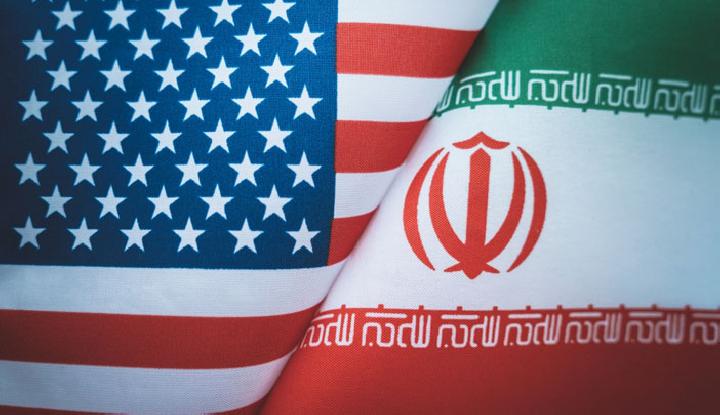
Earlier this year, the US President Donald Trump signalled plans to impose 25% tariffs on Iran's trade partners, illustrating how coercion replaces conversation. Such moves risks escalating confrontation, forcing nations into reactive positions and eroding the trust on which stable commerce depends.
In contrast, regional bodies like ASEAN have consistently advocated dialogue amid rising protectionism, underscoring a pivotal choice facing leaders everywhere: to impose or to engage.
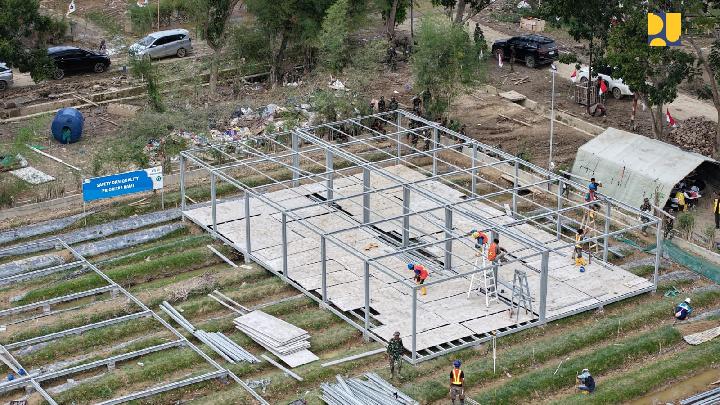
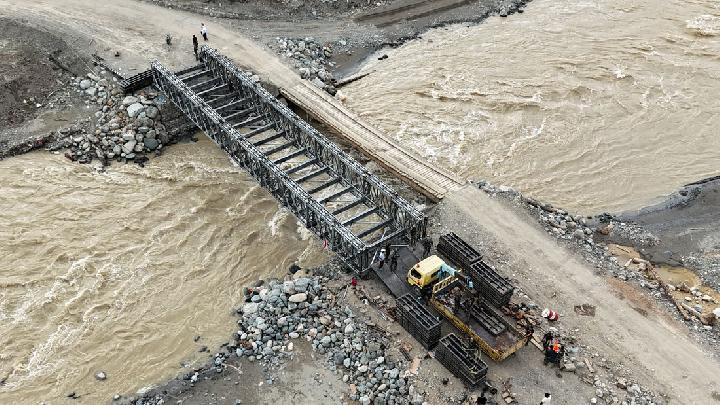
The Thailand–Cambodia conflict, alongside public outrage in Indonesia over insensitive officials’ statements and disaster response failures in Sumatra, shows how quickly the absence of dialogue and empathy can escalate mistrust.
These are not isolated incidents, but symptoms of a deeper crisis in how we communicate, negotiate, and lead. While many leaders have mastered speaking to their audience, they often fall short in listening beyond familiar circles. This gap sits at the heart of a growing leadership deficit that threatens corporate resilience, international stability, and social cohesion.
Globally, the challenge is not a lack of capability, but a failure to listen, understand, and lead with empathy. In this context, the Davos 2026 theme, “A Spirit of Dialogue”, is especially relevant for navigating a fragmented world, where dialogue remains the most credible alternative to division.
GROWTH WITHOUT HUMANITY IS EXPANSION WITHOUT EVOLUTION
Our fixation on economic output has blurred the line between expansion and evolution. Growth without humanity may look impressive on paper, but it leaves an invisible deficit no balance sheet can record: the absence of listening.
This has widened the gap between boardrooms and the workforce, as restructuring and layoffs are framed as necessities with little dialogue for those affected. The result is a fragile form of progress driven by top-down mandates rather than trust.
What happens inside organisations mirrors what happens outside them. When dialogue erodes, understanding gives way to suspicion and cooperation to rivalry. The cost is polarisation, stalled reforms, and brittle institutions.
Such approaches run counter to people-centred frameworks such as the ASEAN Socio-Cultural Community (ASCC) Blueprint 2025, which recognise that organisations and societies thrive not because they speak louder, but because they listen better.
By embracing a spirit of dialogue, leaders can move from directive expansion to shared understanding, building resilient organisations and more cohesive communities.
RECONSTRUCTING GROWTH
Traditionally, growth has been measured through numbers: revenues, market share, productivity, and GDP. These metrics are useful, but incomplete.
Findings from Indonesia’s Human Rights Commission in Papua reveal a broader truth: development fails when it stops listening.
True growth should reflect not only what we build, but what we become. If progress does not make people more capable, secure, and connected, then we have scaled systems without advancing humanity.
This is where a Growth Quotient (GQ) matters. It asks whether economic expansion is improving lives, strengthening communities, and embedding fairness into systems.
To achieve it, leaders must cultivate genuine dialogue, replacing top-down reporting with powerful feedback mechanisms that allow people to speak and be heard.
The future of growth should uplift people rather than maximising productivity and profit. This also means investing in the human foundations of growth: learning, curiosity, character, and dignity. Skills can be trained, but trust is built when people feel heard.
ARTIFICIAL INTELLIGENCE AND AUTHENTIC INTELLIGENCE
As organisations adopt Artificial Intelligence (AI), a new imbalance is emerging. Systems process information at extraordinary speed, while human judgment and emotional awareness struggle to keep pace.
Without oversight, technology risks amplifying bias and automating yesterday’s prejudices into tomorrow’s realities. AI excels at data but lacks moral reasoning. This is where authentic intelligence, rooted in empathy and ethics, must guide its use.
Indonesia’s Minister of Religion, Nasaruddin Umar, has likened AI to an atom, powerful yet potentially dehumanising without spiritual guidance.
Technology should not replace human values, but be shaped by them. Dialogue is the bridge between the two. Without it, AI becomes a megaphone for existing power, accelerating decisions, while reducing reflection.
Leaders who recognise this understand that innovation without ethics leads to repetition, not progress.
Workforce development must therefore build participatory systems where employees, customers, and communities can question, contest, and contribute before technology hardens into policy.
LEADING WITH COMPASSION IN AN AGE OF CONFRONTATION
As WEF President Børge Brende has observed, dialogue is not a luxury, it is a necessity. In an era where the rules-based order is increasingly questioned, the choice becomes clear: will we govern through imposition or understanding?
This is where compassionate leadership, often misunderstood as softness, becomes critical. It is a strategic discipline that requires leaders to create space for others to speak rather than dominating the conversation.
This approach honours dialogue as respect in action, aligned with ASEAN’s people-centred aspirations. Listening becomes the foundation of sound decision-making. When leaders engage stakeholders with humility and purpose, trust replaces transactions, and cooperation becomes natural.
For true growth to regain its meaning, we must build systems where feedback precedes policy, where ethics shape technology, and where listening is valued as highly as speaking.
As Davos 2026 begins, the task is to move dialogue from a well-meaning theme to be the new currency of global power.
Expansion may increase size, but only humanity allows us to evolve.
*) DISCLAIMER
Articles published in the “Your Views & Stories” section of en.tempo.co website are personal opinions written by third parties, and cannot be related or attributed to en.tempo.co’s official stance.