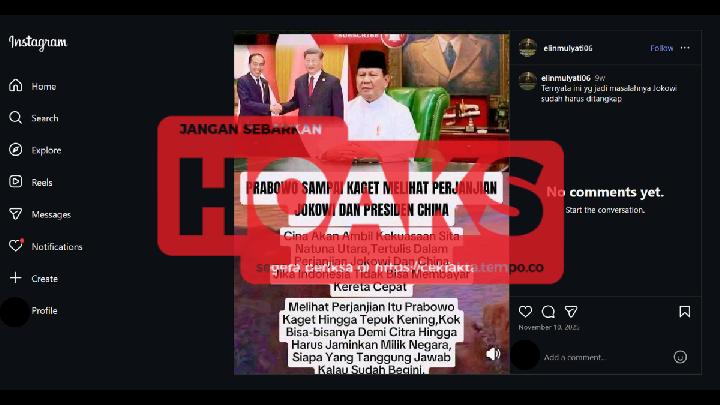
TEMPO.CO, Jakarta - Around 20 social media posts claiming that the North Natuna Sea was used as collateral for debt incurred in the Jakarta–Bandung Whoosh high-speed rail project have circulated on platforms including Instagram [archive], Facebook, and X.
The posts allege that the debt guarantee was stipulated in a cooperation agreement between the Indonesian government and China, signed during the presidency of Joko Widodo. The claim further suggests that President Prabowo Subianto only recently became aware of the agreement’s contents.
One widely shared post reads: “Prabowo was shocked after seeing Jokowi’s agreement with the Chinese president. China will seize control of North Natuna if Indonesia fails to repay the high-speed rail debt.”
But, is it true that the North Natuna Sea was used as collateral for the Whoosh project?
FACT CHECK
Tempo verified the content through interviews, credible websites, and reverse image searches. The findings show that the Jakarta-Bandung Whoosh high-speed rail project is indeed financed through debt to the China Development Bank, but the North Natuna Sea was not used as collateral for the project.
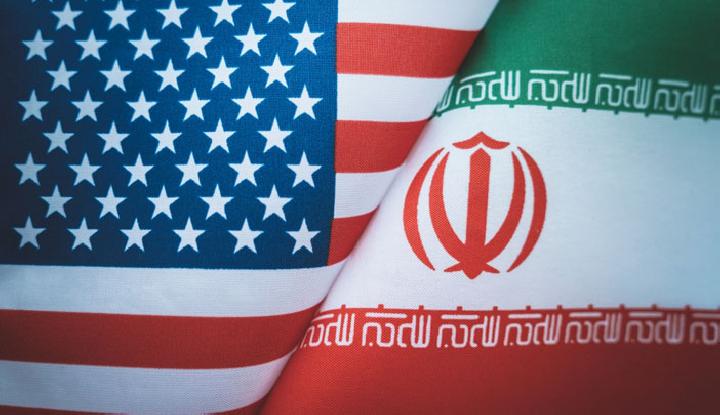
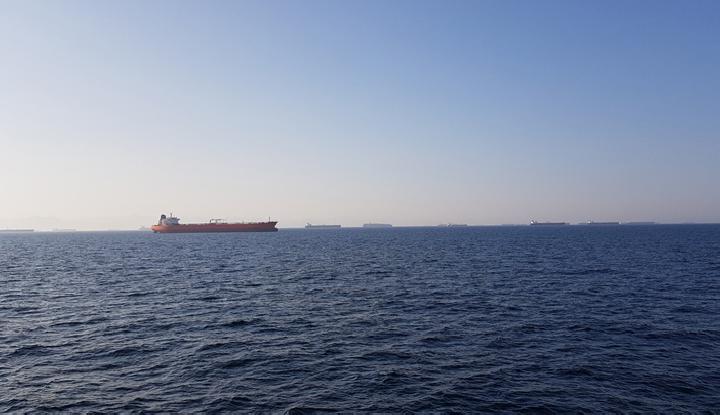
Even so, China is suspected of having a strong interest in controlling natural resources in the North Natuna Sea, also known as the South China Sea. The North Natuna Sea is part of Indonesia’s Exclusive Economic Zone (EEZ) under the 1982 United Nations Convention on the Law of the Sea (UNCLOS).
However, China claims that the maritime boundaries overlap, resulting in repeated disputes in the South China Sea between Indonesia and China.
After President Prabowo Subianto was inaugurated, he issued a joint statement with Chinese President Xi Jinping on cooperation in the North Natuna Sea, which has been assessed as potentially detrimental to Indonesia and beneficial to China. This is because one point of the agreement states that Indonesia and China will pursue joint development in areas of overlapping claims. Previously, however, Indonesia had never recognized the overlapping claims asserted by China.
Whoosh Project Financing Explained
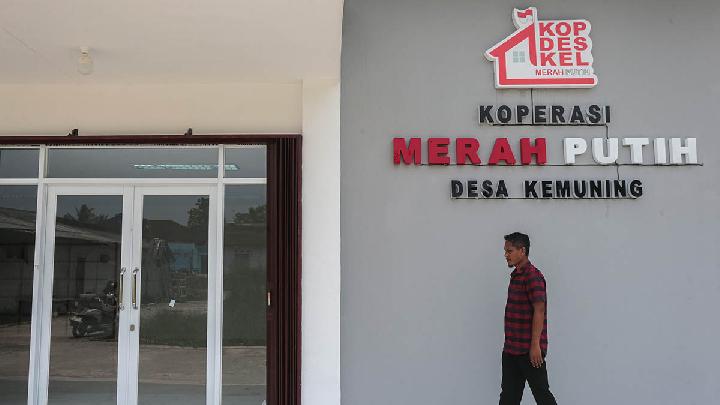
The Jakarta-Bandung high-speed rail project began in 2015 with the establishment of PT Kereta Cepat Indonesia China (KCIC), a joint venture between Indonesian state-owned enterprises and China Railway International Co. Ltd.
The Indonesian consortium operates under PT Pilar Sinergi BUMN Indonesia (PSBI), which includes Wijaya Karya, Kereta Api Indonesia (KAI), Jasa Marga, and Perkebunan Nusantara VIII.
The railway began operations in October 2023, with 60 percent ownership held by the Indonesian consortium and 40 percent by China.
Initially budgeted at US$5.5 billion (Rp89.6 trillion), the project cost later rose to US$7.27 billion (Rp118.4 trillion) due to cost overruns. To address the shortfall, then-president Jokowi signed Presidential Regulation No. 93/2021, allowing government support through state capital injections (PMN) and guarantees.
Indonesia provided Rp 7.3 trillion in PMN through PT KAI to maintain its ownership share. The remaining 75 percent of the cost overrun was covered by a new loan from the China Development Bank, bringing total debt to US$5.415 billion (Rp81.2 trillion).
The loan carries annual interest of 2 percent, with an additional 3.4 percent interest applied to cost overruns. KCIC is required to pay approximately US$120.9 million annually in interest.
Muhammad Zulfikar Rakhmat, Director of the China–Indonesia Desk at the Center of Economic and Law Studies (CELIOS), said that state assets cannot be used as collateral under the project’s financing scheme.
“There is no evidence that the North Natuna Sea or any other sovereign territory was used as loan collateral,” Zulfikar told Tempo on Friday, January 9, 2025.
He explained that the government guarantee is contingent, meaning it applies only under specific future conditions. “It is not backed by specific assets,” he said.
Zulfikar also stressed that the Whoosh project is a business-to-business (B2B) cooperation, not a government-to-government (G2G) agreement. As such, sovereign territory cannot be used as loan security.
A Tempo report published on September 22, 2023, noted that Indonesia’s state budget (APBN) serves as the loan guarantor under Finance Ministry Regulation No. 89/2023, which governs government guarantees for accelerating the high-speed rail project.
Indonesia–China Disputes in the North Natuna Sea
Although the North Natuna Sea is not used as collateral for the Jakarta–Bandung high-speed rail project, China is believed to seek control over the area, which is also known as the South China Sea. The North Natuna Sea is part of Indonesia’s Exclusive Economic Zone (EEZ) under the 1982 United Nations Convention on the Law of the Sea (UNCLOS).
However, China claims the waters as part of its territory. The claim is based on a map known as the Nine-Dash Line, which asserts that 90 percent of the South China Sea belongs to China, including areas that extend close to Vietnam, the Philippines, Indonesia, Malaysia, and Brunei Darussalam.
In 2021, for example, China lodged a protest with Indonesia over natural gas exploration in the North Natuna Sea. China claimed that the exploration took place within its territory. However, under UNCLOS, the area being explored belongs to Indonesia.
After President Prabowo Subianto was inaugurated, he issued a joint statement with Chinese President Xi Jinping on cooperation in the South China Sea or the North Natuna Sea on Saturday, November 9, 2024.
Grace G. Binowo, Senior Advisor at the Indonesia Ocean Justice Initiative (IOJI), assessed that the joint statement by President Prabowo and President Xi could be detrimental to Indonesia and beneficial to China.
In point nine of the joint statement, Prabowo and Xi stated that Indonesia and China had reached an important understanding to pursue joint development in areas of overlapping claims.
Previously, however, Indonesia had never acknowledged such overlapping claims and had consistently adhered to international law as stipulated in UNCLOS.
Image Verification
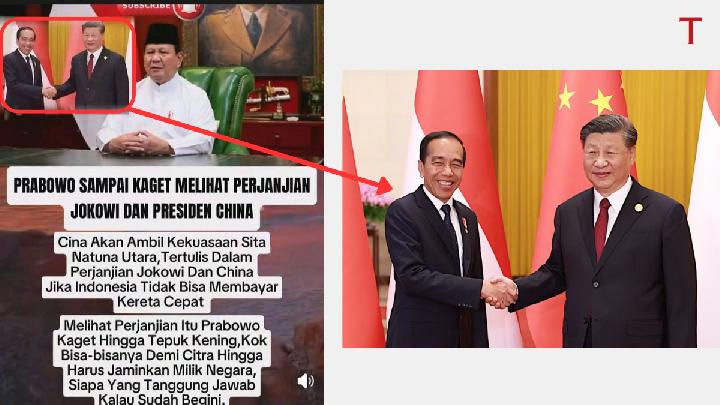
The first version of the image circulating online shows Joko Widodo shaking hands with Xi Jinping. The photo of Jokowi and Xi Jinping was previously reported by VOA Indonesia and is dated October 17, 2023.
During the bilateral meeting, Jokowi conveyed plans to increase investment, including in electric vehicle battery production, automotive manufacturing, spare parts factories, petrochemical refineries, steel production, as well as cooperation related to a Halal Center.
He also encouraged the further development of the “Two Countries, Twin Parks” economic corridor and invited China to become a strategic partner in the development of Indonesia’s new capital city (IKN) in Penajam Paser Regency, East Kalimantan.
Meanwhile, the photo of Prabowo wearing a white shirt and a black cap captures the moment when he delivered Idul Fitri greetings to those celebrating on March 30, 2025, as displayed on the website of the Presidential Staff Office.
In the video version, which is available on the Presidential Secretariat’s YouTube channel, Prabowo only extended Idul Fitri greetings, apologized, and expressed several hopes for the future. There was no discussion of cooperation related to the Whoosh high-speed rail project.
CONCLUSION
Tempo’s verification concludes that the claim stating the North Natuna Sea was used as collateral for debt financing of the Jakarta–Bandung Whoosh high-speed rail project is false.
TEMPO FACT CHECK TEAM
**Do you have information or claims that you want to have fact-checked? Contact our ChatBot. You can also send criticism, objections, or feedback for this Fact-Checking article via email to [email protected].