
TEMPO.CO, Jakarta - Former Israeli military chief Gadi Eisenkot has emerged as the strongest challenger to Prime Minister Benjamin Netanyahu ahead of Israel's parliamentary election later this year, with recent opinion polls showing the retired general narrowing the gap with the country's longest-serving leader.
The election, expected by late October, will be Israel's first national vote since the October 2023 Hamas attack and the subsequent wars in Gaza, Lebanon, and Iran. With public dissatisfaction growing over the government's handling of the conflicts, several surveys indicate that Netanyahu's long political dominance is facing its most serious challenge in years.
As reported by CNN, Eisenkot's newly established Yashar party has surged in recent polls, overtaking other opposition figures including former prime ministers Naftali Bennett and Yair Lapid. A recent Channel 12 survey projected Netanyahu's Likud party winning 23 seats in the Knesset, followed closely by Yashar with 21 seats, while the Bennett-Lapid alliance trailed with 18.
The same poll also showed Eisenkot edging ahead of Netanyahu in public preference for prime minister, with 38 percent backing the former military chief compared with 36 percent supporting the incumbent.
The rise has prompted Likud to redirect its campaign toward Eisenkot after previously focusing its criticism on Bennett. Netanyahu's allies have launched campaign advertisements questioning Eisenkot's leadership credentials, including his English-language skills and his approach to national security.
One Likud social media post recently portrayed Eisenkot alongside Arab lawmaker Ahmad Tibi, accusing him of depending on Arab parties to form a future government—an argument Netanyahu has repeatedly used against opposition coalitions.
Eisenkot's political appeal stems partly from his sharp contrast with Netanyahu's style. While Netanyahu has built his career on polished political messaging and international diplomacy, Eisenkot presents himself as a reserved military professional focused on strategy rather than rhetoric.
Born to Moroccan immigrant parents and raised outside Israel's traditional political elite, Eisenkot also represents a rare opportunity for Mizrahi Jewish voters to support a prime ministerial candidate from their own background. Analysts say this could weaken one of Likud's most reliable voting blocs.
Before entering politics, Eisenkot served as Israel Defense Forces chief of staff from 2015 to 2019 after rising through the ranks of the Golani Brigade. During his military career, he became closely associated with the "Dahiyeh doctrine," a strategy advocating overwhelming military force against militant groups and the infrastructure supporting them.
According to The Arab Weekly, Eisenkot recently defended the doctrine, saying he had implemented what he described as "disproportionate strikes" during conflicts with Hezbollah. He has also argued that Israeli forces should retain the freedom to strike Hezbollah targets throughout Lebanon despite international ceasefire efforts.
Although regarded as politically centrist, Eisenkot has maintained hawkish positions on national security. He has dismissed calls for immediate Palestinian statehood as irrelevant under current conditions and has criticized Netanyahu for agreeing too readily to ceasefire arrangements pushed by the United States following the conflict with Iran.
Eisenkot briefly joined Netanyahu's emergency war cabinet after the October 2023 Hamas attack but resigned eight months later, accusing the government of lacking a coherent strategy for the war and the release of Israeli hostages held in Gaza.
His criticism carried particular weight because of his own family's sacrifices. His youngest son, Gal Eisenkot, was killed while serving in Gaza in December 2023, and two of his nephews also died during the conflict.
Those personal losses have strengthened Eisenkot's public image as a leader who has directly shared the burden borne by Israeli families throughout the prolonged wars.
Despite his growing momentum, analysts caution that defeating Netanyahu remains far from certain. Israel's coalition-based parliamentary system means the largest party does not automatically form the next government, and any anti-Netanyahu alliance would likely require support from parties spanning the political left, center, right, and possibly Arab lawmakers.
Political observers also note that Netanyahu has repeatedly overcome unfavorable polls during previous elections through disciplined campaigning and coalition negotiations.
Still, many analysts believe Eisenkot's greatest political strength lies in offering voters a fundamentally different style of leadership rather than attempting to imitate Netanyahu.
With several months remaining before Israelis head to the polls, the contest is expected to intensify as both camps seek to shape the country's future after nearly three years of regional conflict.
Read: US Woos Israeli Opposition: Will Trump Turn on Netanyahu?
Click here to get the latest news updates from Tempo on Google News
Why Are ICC Judges Suing Trump Over Sanctions?
3 hari lalu
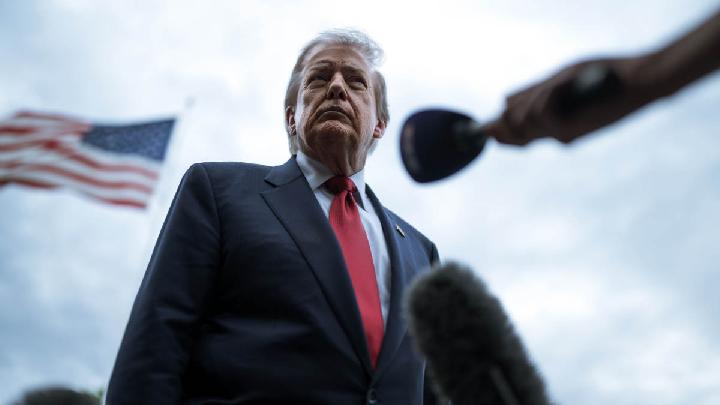
Three ICC judges have filed a lawsuit against U.S. President Donald Trump and his administration, challenging sanctions against them.
US Woos Israeli Opposition: Will Trump Turn on Netanyahu?
6 hari lalu
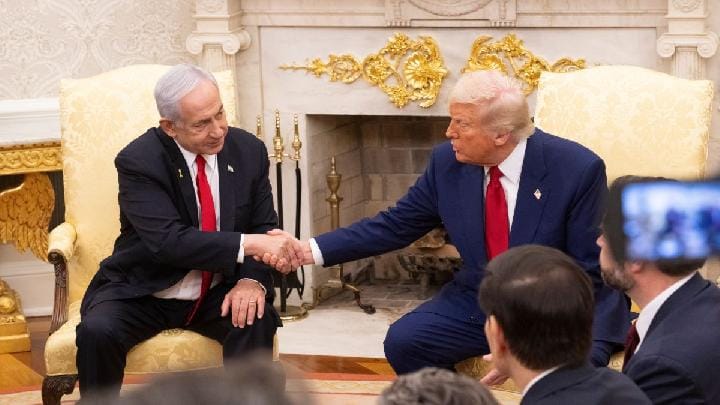
The United States government is reportedly reaching out to Israeli opposition amid a possible change in Benjamin Netanyahu's government.
Trump Losing Patience With Israel's Lebanon Attacks
13 hari lalu

US President Donald Trump publicly criticized Israeli Prime Minister Benjamin Netanyahu on Tuesday, urging him to show greater restraint in Lebanon.
Is Israel Spying on US? Espionage Among Allies Has Precedent
19 hari lalu
The Pentagon has reportedly raised the threat of Israeli espionage to its highest level. Both governments officially deny this.
Trump Warns Netanyahu Against Escalating Conflict With Iran
20 hari lalu
Trump has warned the Prime Minister of Israel, Benjamin Netanyahu, not to exacerbate the conflict escalation with Iran.
Trump Promises Calm in Lebanon with Eyes on Peace with Iran
28 hari lalu
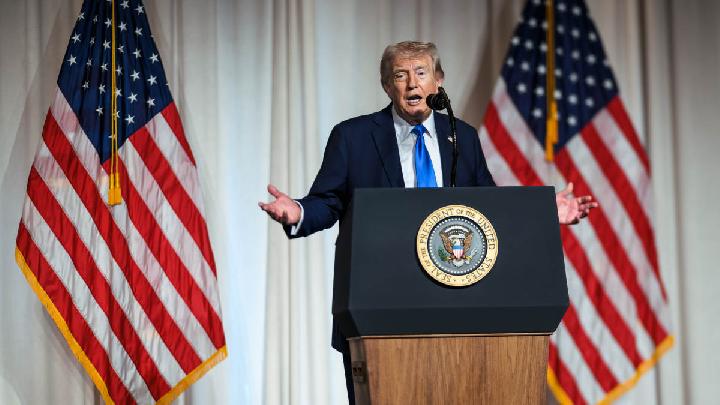
The U.S. president said Israel and Hezbollah agreed to de-escalate, while Iran halted talks, insisting Lebanon be included in any peace deal.
Trump Reportedly Clashes With Netanyahu Over Lebanon Escalation
28 hari lalu

US President Donald Trump reportedly lashed out at Israeli Prime Minister Benjamin Netanyahu during a heated phone call on Monday, June 1.
Netanyahu Says Israel Seeking to Control 70% of Gaza
30 hari lalu
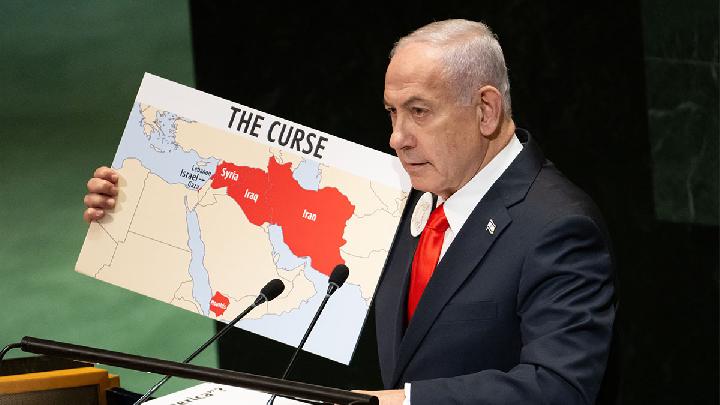
Israel currently controls 60 percent of the Gaza Strip. Netanyahu is looking to expand it.
Netanyahu's 'Secret Visit' Sparks Tension With UAE
43 hari lalu

The alliance between Israel and the UAE is showing signs of strain after Netanyahu publicly disclosed what he described as a "secret visit" to the UAE
UAE 'Denies Reports' of Secret Visit by Israel's Netanyahu
47 hari lalu

The Emirati Foreign Ministry said ties with Israel are public and not based on secret or unofficial arrangements.