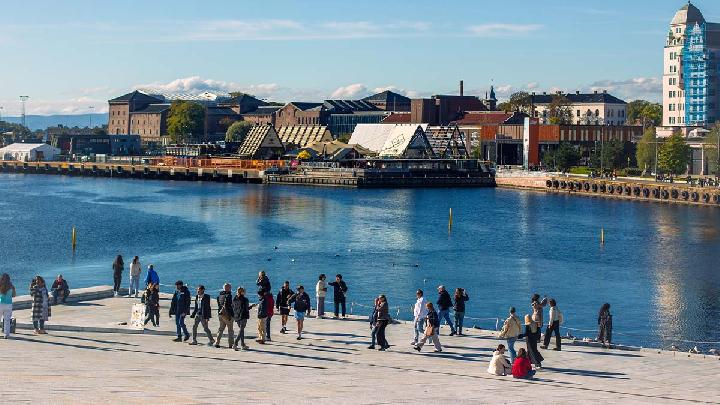

TEMPO.CO, Jakarta - This last weekend saw recording-breaking temperatures exceeding 40 degrees Celsius (104 degrees Fahrenheit). These are life-threatening situations for retirement and nursing homes and hospitals with little or no air conditioning.
One reason for this is that Germany doesn't have any national heat protection regulations that would require cooling systems in such facilities.
Infrastructure was also affected, with trains and trams unable to function and the asphalt on many roads cracking.
Experts have been issuing warnings for a long time. Speaking on Deutschlandfunk Radio (DLF), Andreas Becker, a climate expert at the German Weather Service, said that temperatures in Germany are rising steadily and will continue to do so in the coming years.
Europe hit hardest by global warming
According to the Federal Environment Agency, around 50 hectares of land were turned into residential, transportation and commercial areas in Germany every single day between 2021 and 2024. In other words: Every day in Germany, 70 soccer fields' worth of natural areas disappeared.
Sealing soil prevents rainwater from seeping into the ground, leading to severe flooding during heavy rainfall. In addition, sealed surfaces can no longer allow water to evaporate, causing cities to heat up excessively and creating dangerously hot urban areas.
So, what can policymakers do to ensure the country is better prepared for extreme temperatures in the future?
Plans for cities already exist, but implementing them takes time and is expensive. Environment Minister Carsten Schneider from Germany's center-left Social Democratic Party (SPD) said Monday on public broadcaster ARD that he does not believe it is up to the federal government in Berlin to lead the way in adapting to climate change. "The responsibility lies with the federal states and municipalities," he said. "For example, I cannot even provide financial support because Germany's Basic Law prohibits me from doing so."
The environment minister did promise to discuss with his conservative coalition partners the possibility of amending the Basic Law so that the federal government could take a more active role in implementing such changes. But he added that states and municipalities do have around €100 billion ($114 billion) available for climate projects thanks to the €500 billion infrastructure program approved after last year's federal election.
Climate Council: Germany set to miss its own CO2 reduction targets
Greenhouse gases are primarily generated by burning fossil fuels. They act as an insulating blanket around Earth, causing global temperatures to rise.
Germany is committed to cutting its greenhouse gas emissions by about 65% by 2030, as measured against 1990 levels and has already achieved 48% of that goal. But many experts do not believe the government can meet its promised target.
Even with a strong climate policy, the effects of the greenhouse effect are expected to intensify in Germany over the next few years, as these are a consequence of CO2 emissions from previous years.
The current government, led by Chancellor Friedrich Merz of the conservative Christian Democratic Union (CDU), however, is once again allowing the installation of new oil and gas heating systems.
Greenpeace proposes an ecological tax on billionaires
Martin Kaiser, head of International Climate Politics at Greenpeace Germany, told DW, "Many municipalities are already heavily in debt, meaning the special fund alone is insufficient, for example, to quickly eliminate heat-absorbing concrete surfaces, create water-retaining green spaces, or plant shade-providing trees. Such measures require long-term public support and investment and cannot be financed by one-time investments alone."
Greenpeace has proposed an environmental tax on billionaires as a solution; however, there does not currently appear to be enough support for this within the governing coalition.
Germany's opposition parties have been quick to criticize the government. The chair of the socialist Left Party, Ines Schwerdtner, said that more needs to be invested in public transport — especially in cities — so that buses and trains can operate safely even during extreme heat.
Green Party leader Felix Banaszak called for providing direct support — without red tape — to particularly vulnerable facilities such as retirement and nursing homes. Banaszak also commented on the government's failure to issue a statement during the heat wave: "One gets the feeling that Friedrich Merz and his government have agreed to keep quiet on the issue and were simply hoping to avoid having to say anything about the situation until it rains again," he told reporters.
Climate protection has lost much of its urgency
What's more, most Germans don't seem as concerned about climate protection as they once were.
In a nationwide survey published in early June by the polling institute infratest-Dimap, only about 10% of respondents said that environmental protection and climate change were the most important or second-most important issues for them.
Instead, issues such as the economic downturn and immigration topped the list.
That said, the survey was conducted before Germany experienced its hottest heat wave to date.
Read: 13 Die in Swimming Accidents During Germany Heat Wave
Click here to get the latest news updates from Tempo on Google News
UK Issues Rare Red Heat Warning as Temperatures Near 40C
7 hari lalu

The UK is bracing for one of its most extreme heatwaves on record, with temperatures forecast to exceed 35 degrees Celsius and potentially reach 40C.
Indonesia Reports 81,000 Hectares of Land Burned Amid El Nino
12 hari lalu
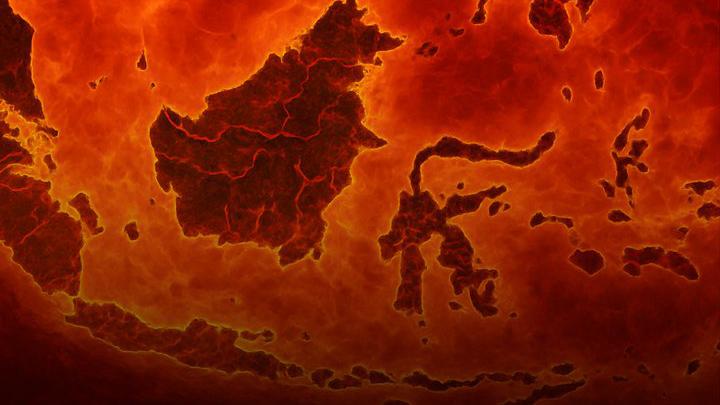
Forestry Minister noted that the figure is higher than last year's total and is closely linked to El Nino, which has reached a moderate level.
How Extreme Heat Could Impact the 2026 FIFA World Cup
13 hari lalu

Due to hot conditions, nearly half of the matches scheduled for the 2026 World Cup are likely to be categorized as disruptive.
Mexico to Shorten School Year Due to World Cup, Summer Heat
52 hari lalu

Mexico announced a decision to end the academic year earlier than planned because of the World Cup and a heat wave. But the decision sparked backlash.
How Do AI Data Centers Combat 'Heat Islands'?
54 hari lalu

The massive computing capacity demand at data centers eventually triggers a significant jolt in heat within the devices.
Atmospheric Absorption of Electromagnetic Radiation Adds to Rising Heat in Java
23 Oktober 2025
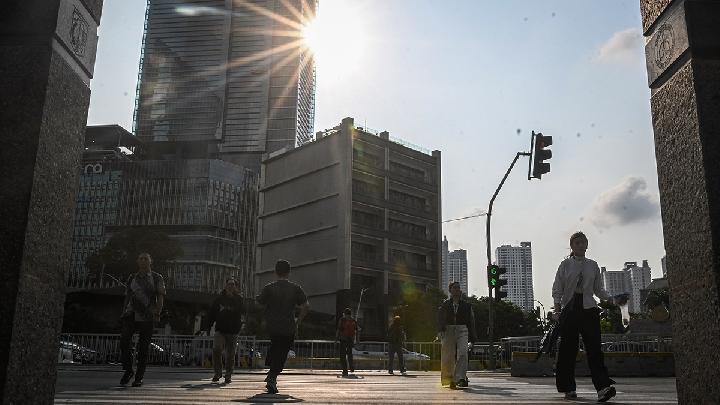
The absorption of electromagnetic radiation, especially in the lower tropospheric layer, causes changes in air temperature.
3 Key Factors Behind Java's Sudden Shift from Scorching Heat to Humid Weather
22 Oktober 2025
BRIN explained that Java's weather transition is being driven by a combination of global and regional atmospheric factors occurring simultaneously.
BMKG Warning: Hot Weather to Persist Across Java Until Early November
15 Oktober 2025

BMKG attributes the hot weather, especially notable during the day and night, to a combination of the sun's apparent movement.
Scorching Heat in Jakarta, BRIN: Stay Alert for Evening Rainfall
14 Oktober 2025

Scorching heat with strong gusts has been affecting Jakarta and Tangerang in the last few days.
Protecting India's Geriatric Population from the Rising Heat Burden
28 Agustus 2025

India reported a 55 percent rise in heat-related mortality among those aged over 65 between 2000-04 and 2017-21.