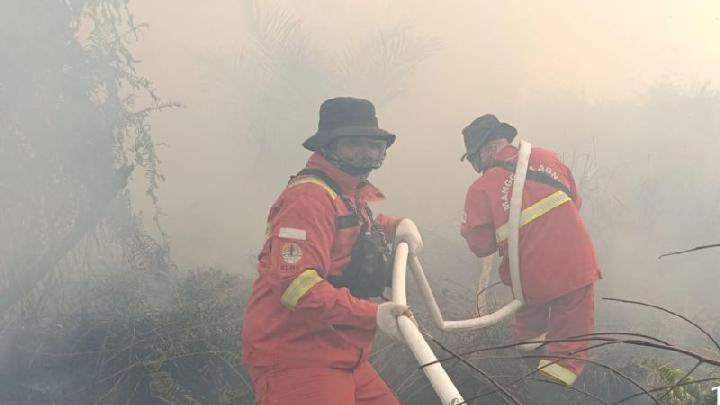
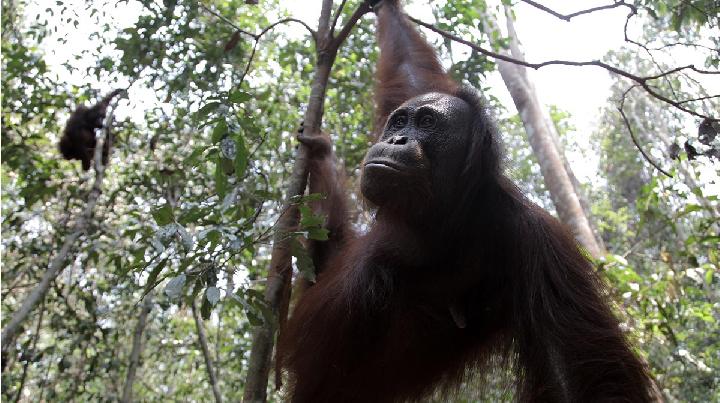
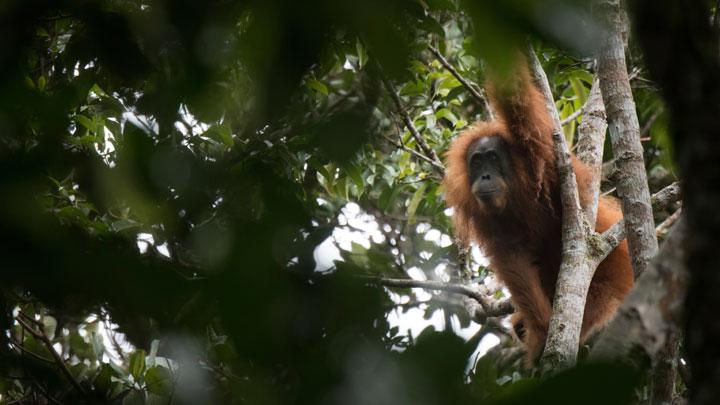
The Bornean orangutan is facing imminent extinction. We are both the cause and the ones who will bear the brunt of the consequences.
THE root cause of the disaster currently unfolding in the natural forest of Kapuas Hulu Regency, West Kalimantan, is truly shameful. For more than two centuries, we, humans, have studied past species extinctions and their various causes in the hope of preventing a repeat in the future. Yet, we remain powerless, even indifferent, when the threat of extinction becomes increasingly real for one of humanity’s closest relatives: the orangutan.
Over the last two years, deforestation has surged in Kapuas Hulu. At least 13,000 hectares of natural forest have vanished, ending the downward trend in deforestation that had held steady since the regency was designated a United Nations Educational, Scientific, and Cultural Organization (UNESCO) biosphere reserve in 2018. Three out of every four hectares of forest loss occurred within oil palm plantation concession areas.
That is not even the worst of it. Last year, more than half of the land cleared for this oil palm plantation expansion encroached on primary forests in the habitat fragment of the Bornean Orangutan (Pongo pygmaeus), stretching from Danau Sentarum National Park to Betung Kerihun National Park. When Tempo visited the site in May 2026, plantation development in one of the concession areas was still ongoing, with plans to clear tens of thousands more hectares of forests.
The shrinking habitats and populations of the Bornean orangutan due to industrial plantation development are certainly nothing new. This same issue has caused the threat status of this species—alongside the Tapanuli orangutan (Pongo tapanuliensis) and the Sumatran orangutan (Pongo abelii)—to deteriorate from endangered to critically endangered, only one step away from extinction. The latest assessment by the International Union for Conservation of Nature (IUCN) in 2016 estimated that only 47,000 Bornean orangutans remained. Part of this population is at risk of extinction in the wild within 50 years.
Yet, the destruction of the habitat pockets in Kapuas Hulu is particularly alarming. It is occurring at a time when we actually know exactly how to prevent it.
A decade ago, the government gathered primate conservation experts from Indonesia and abroad to formulate a strategy to avert the orangutan’s extinction. The workshop identified that the Lake Sentarum and Betung Kerihun landscapes represented the “best” remaining habitat fragments for the orangutans’ survival. Most of the 42 Bornean orangutan habitat pockets were deemed to be in poor condition.
The assessment also detected the extinction of local subspecies in several habitat areas bisected by plantation and forestry concessions. To prevent a similar situation from recurring in Kapuas Hulu, experts recommended that the government prioritize the protection of habitat areas in Lake Sentarum and Betung Kerihun regions. To do so, the government needed to halt the issuance of new permits and prohibit forest clearing within existing concession areas.
What is currently transpiring in the wilds of Kapuas Hulu shows that these recommendations fell on deaf ears. On the ground, the Ministry of Forestry has failed to halt the ongoing deforestation, hiding behind the pretext that the plantation development is located outside designated forest zones. Since these areas are not classified as forest zones, the local government has issued new plantation permits in the Lake Sentarum and Betung Kerihun landscapes.
Should this situation continue unabated, it is entirely possible that the current generation will witness the extinction of the Bornean orangutan firsthand. The extinction of this keystone species of the tropical forest will undoubtedly trigger a massive domino effect on the Earth and its inhabitants. This is also shameful, as the reason behind it is none other than us.
Oil Palm Plantations That Destroy Bornean Orangutan Habitats
1 hari lalu
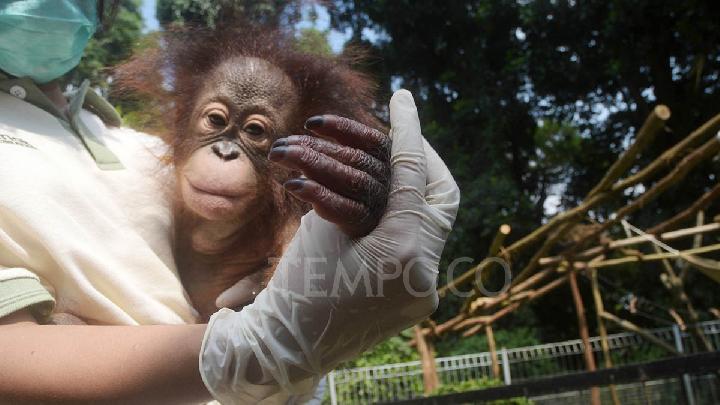
Deforestation is rising in one of the last and best remaining habitats of the Bornean orangutan.
Cyclone Senyar Landslide Kills 7 Percent of Tapanuli Orangutans
22 hari lalu
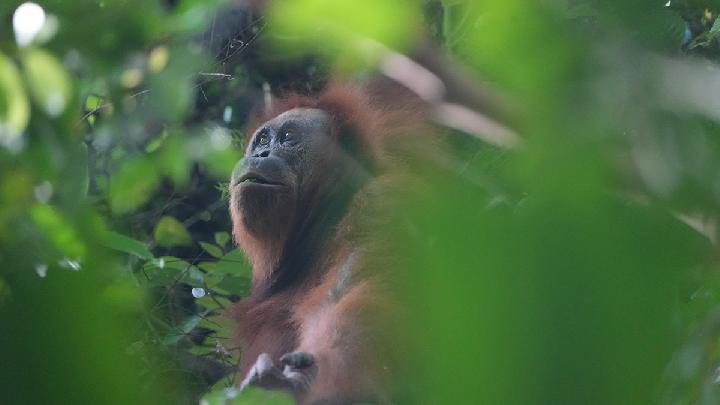
Landslides caused by extreme rainfall brought by Cyclone Senyar in 2025 have eroded the Tapanuli orangutan population. What is the extent of its impact?
Monetizing National Parks
51 hari lalu

Hashim Djojohadikusumo is designing a financing scheme for national parks. Critics say it amounts to handing out concessions in pursuit of profit.
Orangutans Caught Between FOLU Net Sink and Carbon Profits
16 April 2026
The government is busy chasing profits from carbon economic value mechanisms, while neglecting emission reduction targets in the forestry sector.
Indonesia, Malaysia Commit to Strengthen Cross-Border Wildlife Protection
27 Februari 2026
Indonesia and Malaysia have agreed to strengthen cooperation on cross-border wildlife protection.
Tapanuli Orangutan Faces Extinction After Sumatra Floods
7 Januari 2026
A December 2025 study reveals flash floods in North Sumatra likely killed up to 10.5% of the Tapanuli orangutan population.
Indonesia Repatriates Four Orangutans from Illegal Trade in Thailand
24 Desember 2025

The repatriation of four orangutans highlights the ongoing issue of illegal wildlife trade and the need for conservation efforts.
Study: Orangutans Need Years of Guidance to Learn How to Eat
26 November 2025

Orangutan young highly depends on the social guidance of their mothers to know the safe food list for consumption.
Orangutan Found Near Central Kalimantan's Oil Palm Plantation Linked to Land Clearing, Says BKSDA
6 Agustus 2025

A male orangutan named Sugiman was found near an oil palm plantation. It is suspected that it unintentionally entered the area due to land clearing.
Kelawasan Island Declared as New Orangutan Sanctuary Development Initiative
14 April 2025

Kelawasan Island in East Kalimantan has been officially designated as a protected area and will become the center for an orangutan sanctuary.